Nature as a Language of Painting
In traditional Chinese painting, flowers are rarely merely flowers. A blossom may suggest the passing of spring, an orchid may embody moral integrity, and a chrysanthemum may evoke the quiet dignity of autumn. Such associations have developed through centuries of interaction between painting, poetry, philosophy, and everyday life.
For Li Hongzhao, this tradition remains a living artistic language.
A professor at Xi'an Academy of Fine Arts and director of Shaanxi Wangchuan Painting Academy, Li has devoted decades to the practice and teaching of Chinese painting. His work draws upon the expressive possibilities of ink and brush while maintaining a deeply personal relationship with nature and classical literature.
Flowers of Prosperity, a collection of twelve paintings, offers an intimate introduction to this artistic sensibility.
Peonies, hydrangeas, peach blossoms, chrysanthemums, magnolias, orchids, and other botanical subjects appear alongside swimming fish and crickets. Some compositions are enriched by color, while others rely almost entirely on the subtle variations of ink.
Although each painting can be appreciated independently, the twelve works together reveal a broader artistic vision: nature understood not as an object of detached observation, but as a source of poetry, memory, and philosophical reflection.
The Poetry of Flowers: Beauty and Impermanence
One of the most compelling aspects of Li Hongzhao's painting is his ability to connect the immediate beauty of flowers with the deeper emotional associations of Chinese poetry.
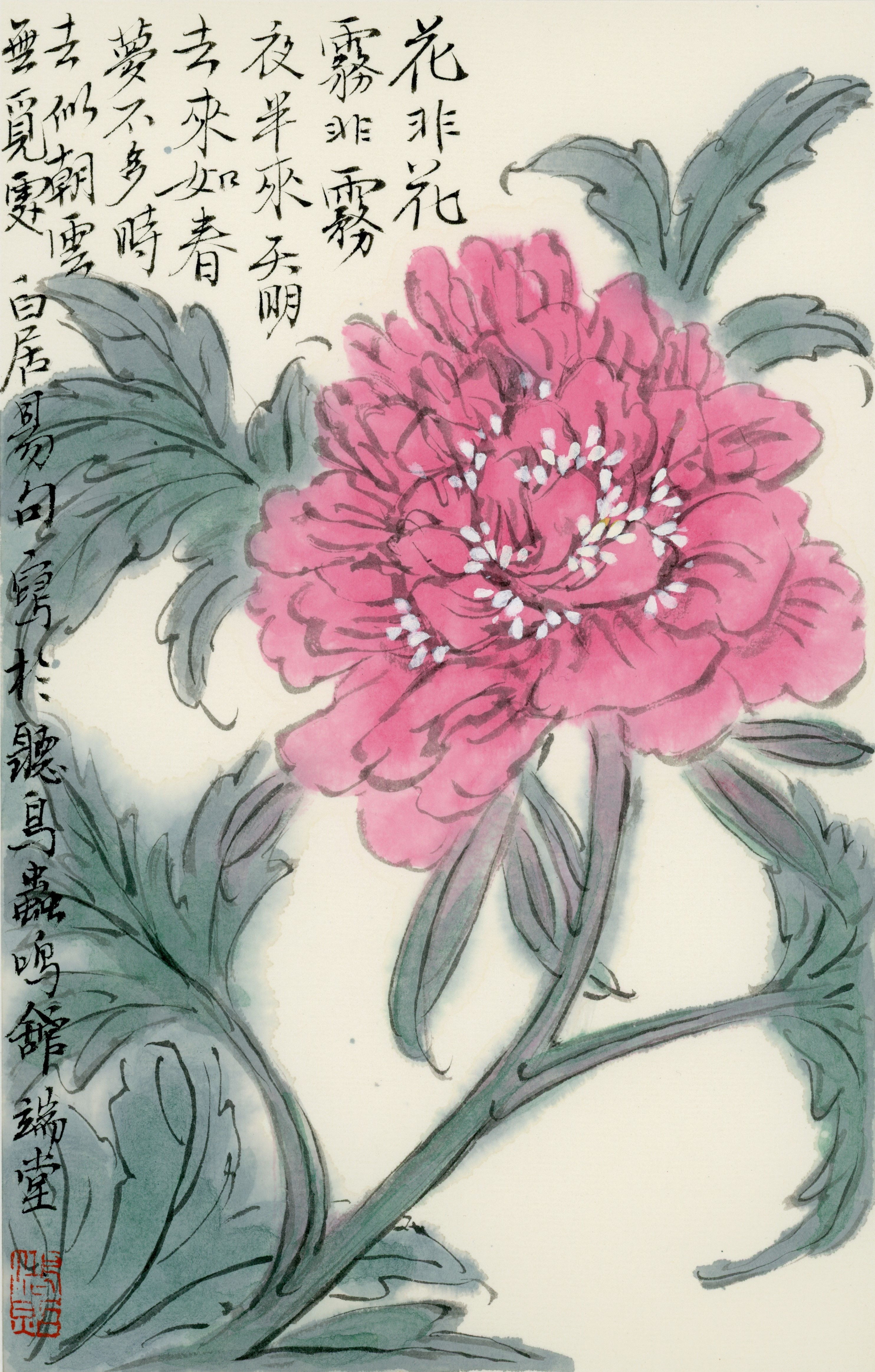
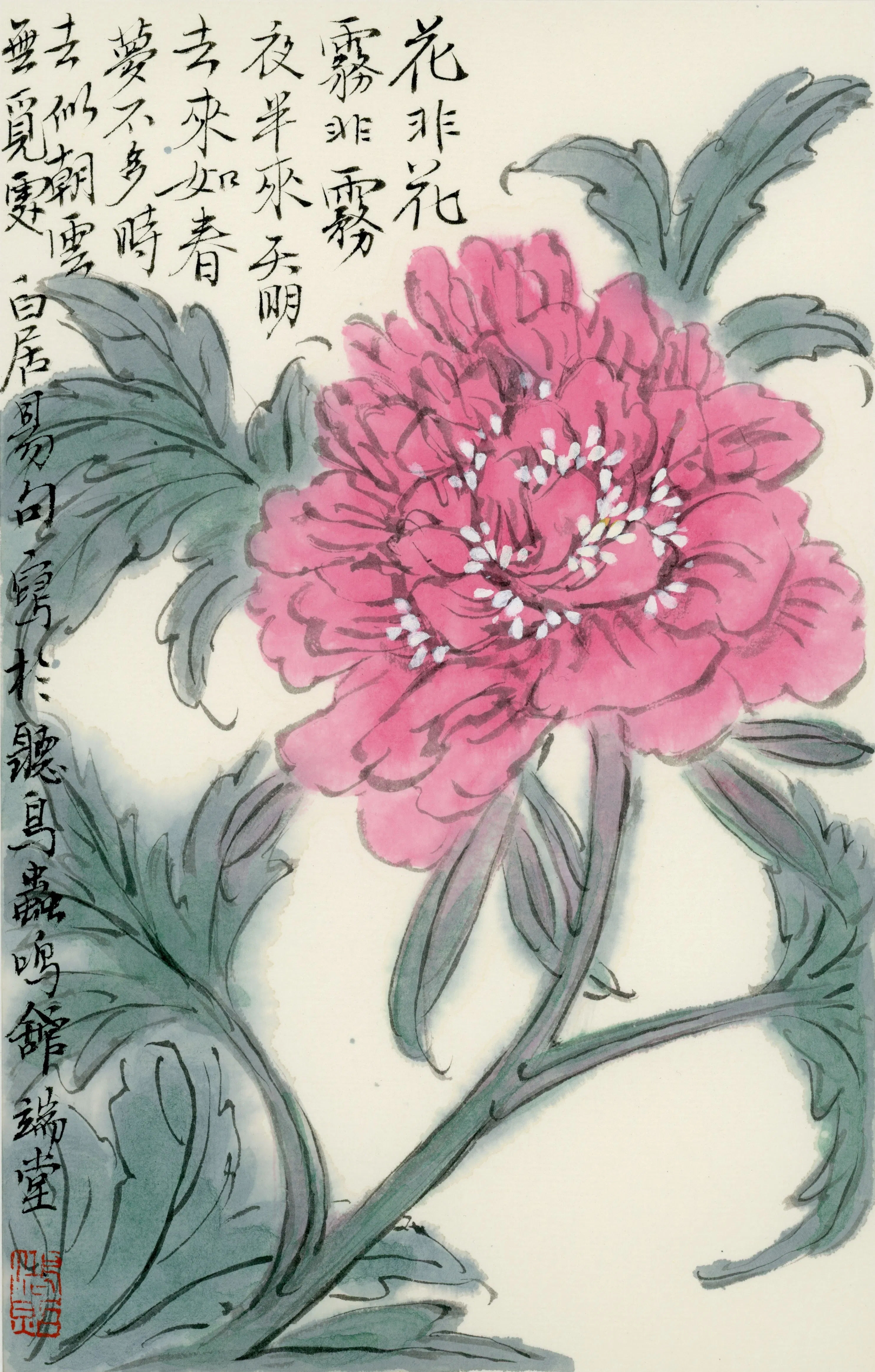
In Peony (牡丹), the flowers appear in vivid color, their abundant petals conveying the richness and vitality traditionally associated with this celebrated subject.
Yet the accompanying inscription introduces a more contemplative dimension. Li quotes the Tang dynasty poet Bai Juyi's Flower, Not Flower, a poem in which beauty appears and disappears like a dream or a passing cloud.
The contrast is significant.
While the peonies suggest fullness and flourishing life, the poetry reminds the viewer that even the most splendid beauty is transient. The painting thus moves beyond a conventional celebration of prosperity, becoming a meditation on the fleeting nature of experience.
In Hydrangea (繡球花), Li explores a different kind of floral beauty. The layered blossoms are rendered with delicate color and carefully controlled brushwork, creating an impression of softness and complexity.
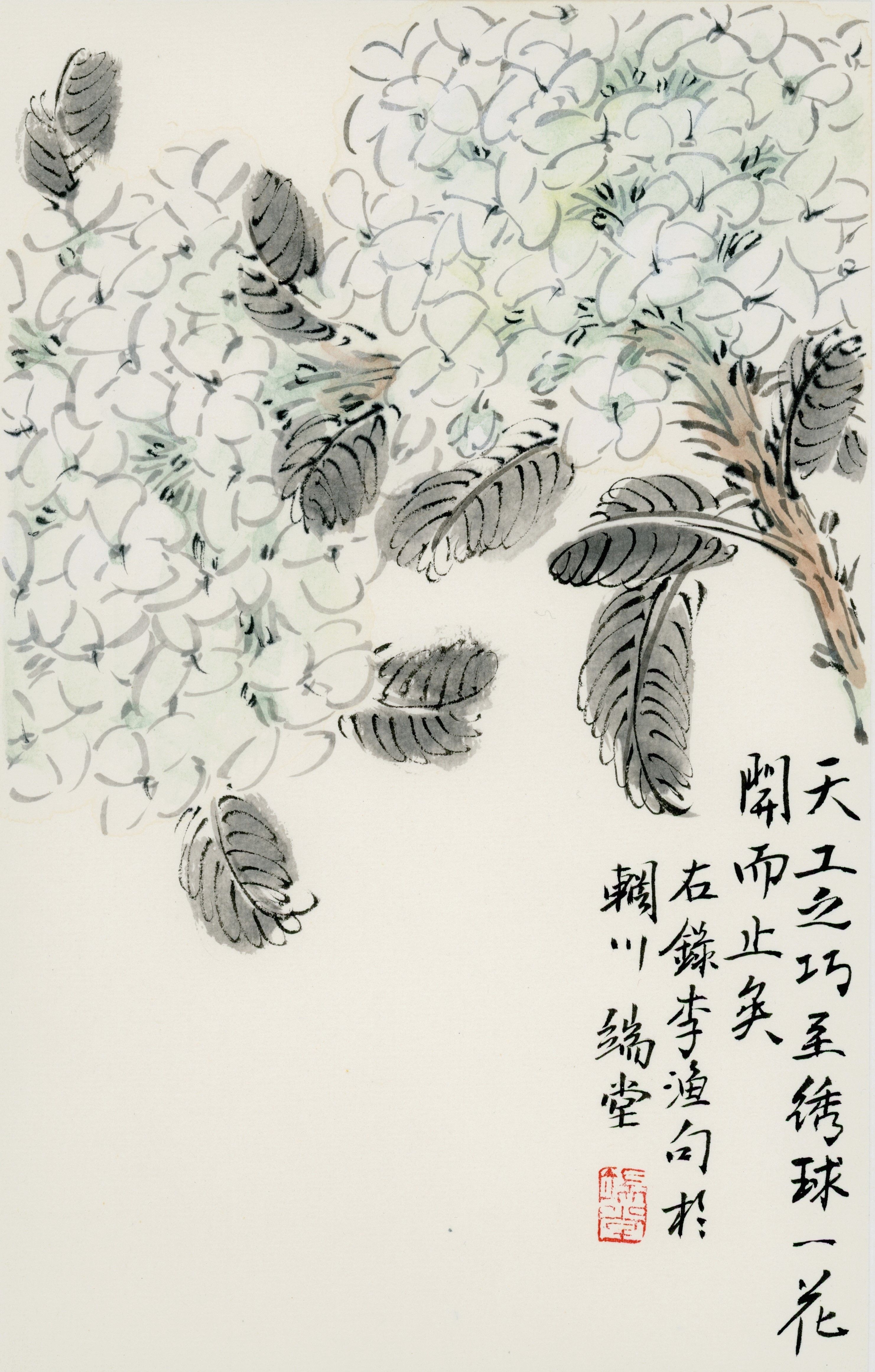
Its inscription draws upon the writings of Li Yu, the seventeenth-century literary figure, praising the extraordinary ingenuity of nature expressed through the hydrangea.
Here, painting and literature share a common purpose: to recognize the seemingly inexhaustible inventiveness of the natural world.
In Pear Blossoms (梨花), the mood becomes quieter. White flowers emerge from gently articulated branches, their restrained coloration emphasizing freshness and simplicity.
Together, these paintings reveal the range of Li's floral vocabulary, from luxuriant color to understated elegance.
Between Movement and Stillness: The Rhythm of Living Nature
Not all the works in Flowers of Prosperity are concerned exclusively with flowers.
In Peach Blossoms and Swimming Fish (桃花游魚), two fish move beneath flowering branches, bringing a sense of animation to the composition.
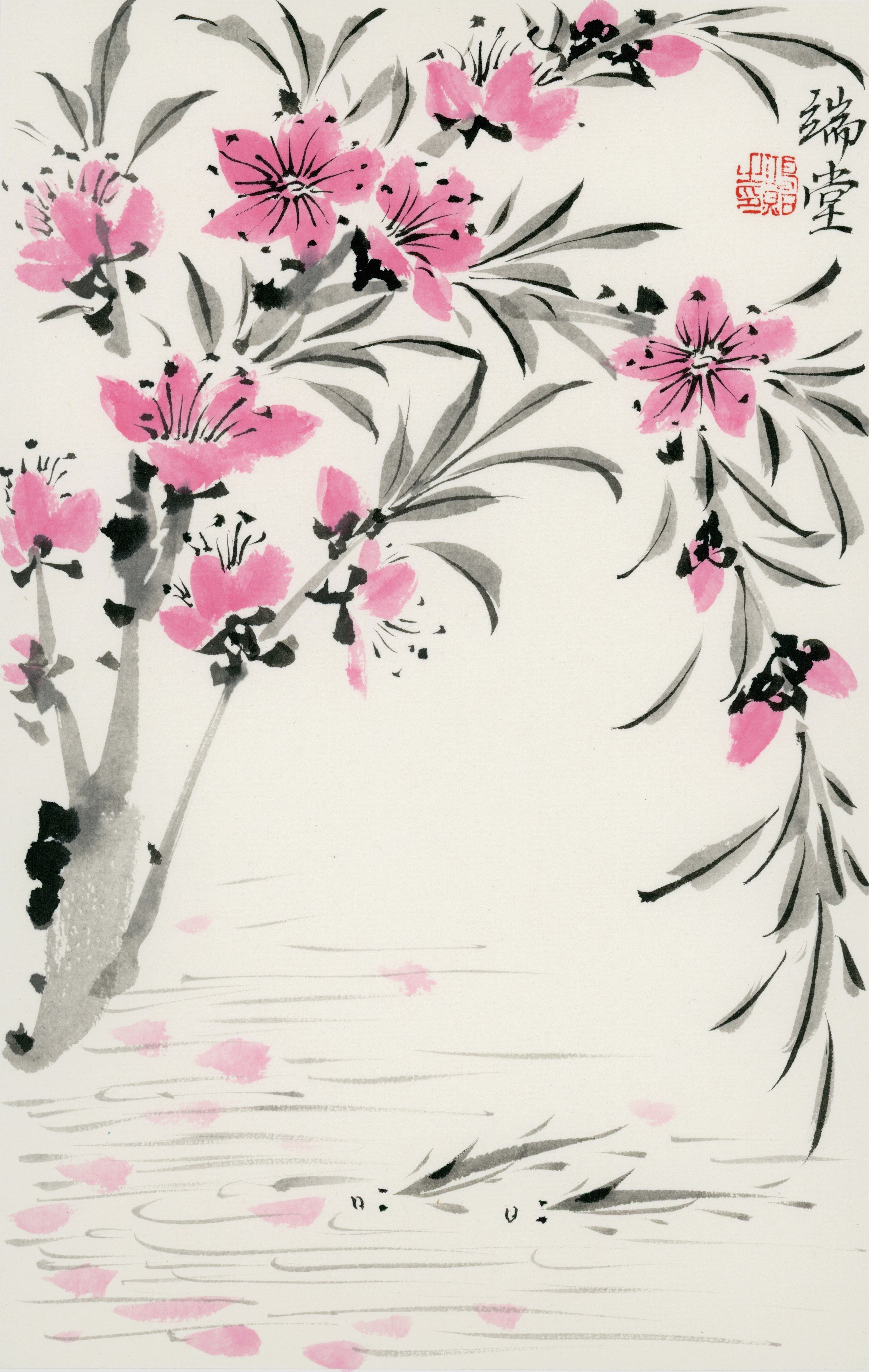
The contrast between the blossoms above and the fish below creates a dialogue between different forms of life. The branches suggest the seasonal renewal of spring, while the fish introduce movement, spontaneity, and a quiet sense of freedom.
The painting is not simply a depiction of separate natural objects. Flowers, water, and fish become elements of a unified living environment.
A more personal dimension emerges in Cricket (草蟲圖).
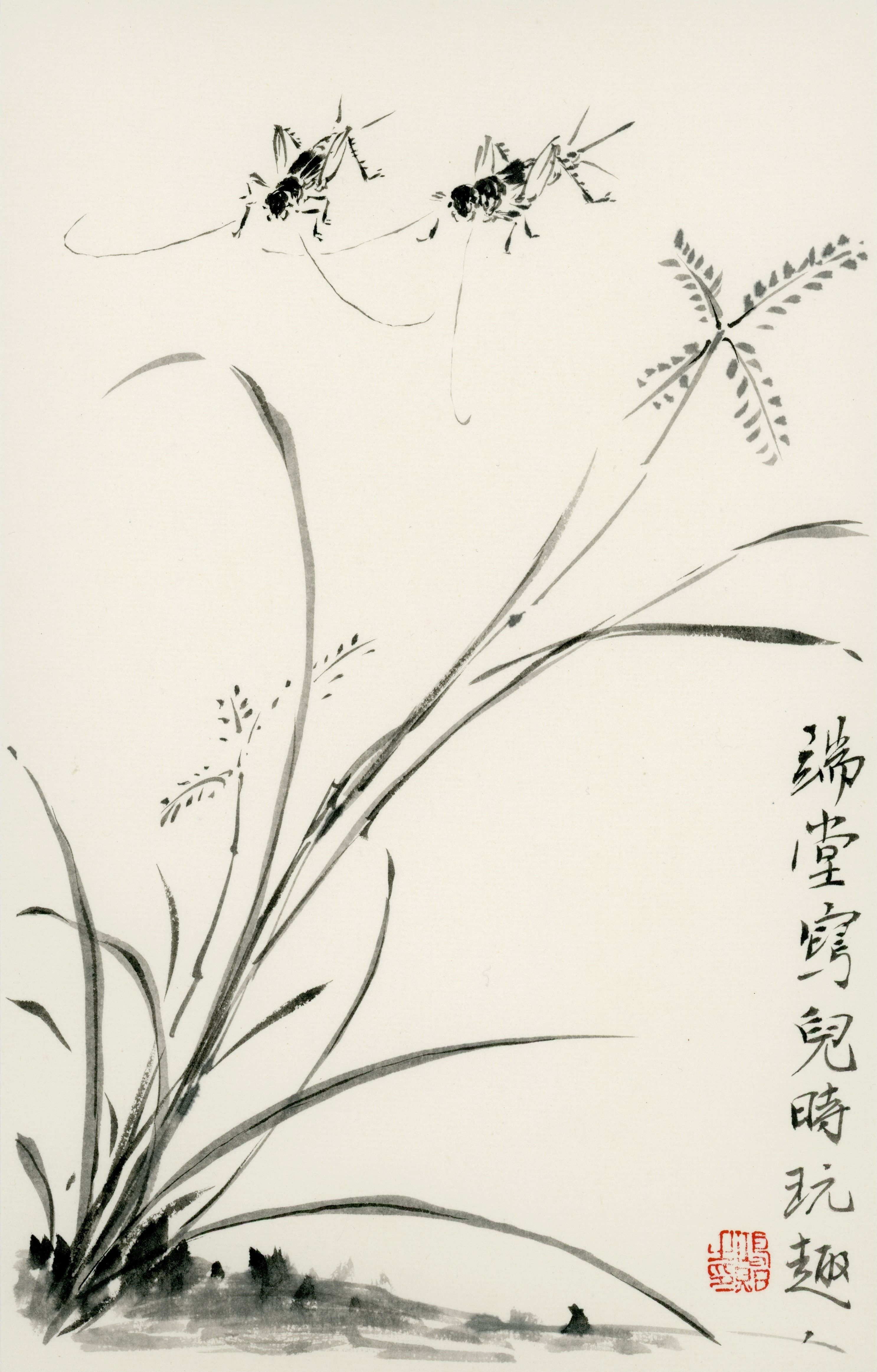
The inscription, "端堂寫兒時玩趣," identifies the subject with the artist's memories of childhood amusement.
This brief statement transforms the painting into something more than an observation of insects.
The crickets evoke a familiar experience of childhood in China, where watching and playing with these small creatures has long formed part of seasonal life.
Li's brushwork gives the insects an immediate vitality, while the surrounding vegetation establishes a natural setting without overwhelming the principal subjects.
The painting becomes an encounter between observation and remembrance.
It demonstrates how the traditional language of Chinese flower-and-bird painting can accommodate personal narrative, humor, and everyday experience.
The Moral Imagination of Chinese Literati Painting
Certain plants occupy a particularly important place in Chinese literati culture because of the ethical and philosophical meanings associated with them.
Among these, the orchid and chrysanthemum have long served as expressions of cultivated character.
In Orchid (蘭), Li uses the restrained language of monochrome ink to depict the slender leaves and delicate blossoms.
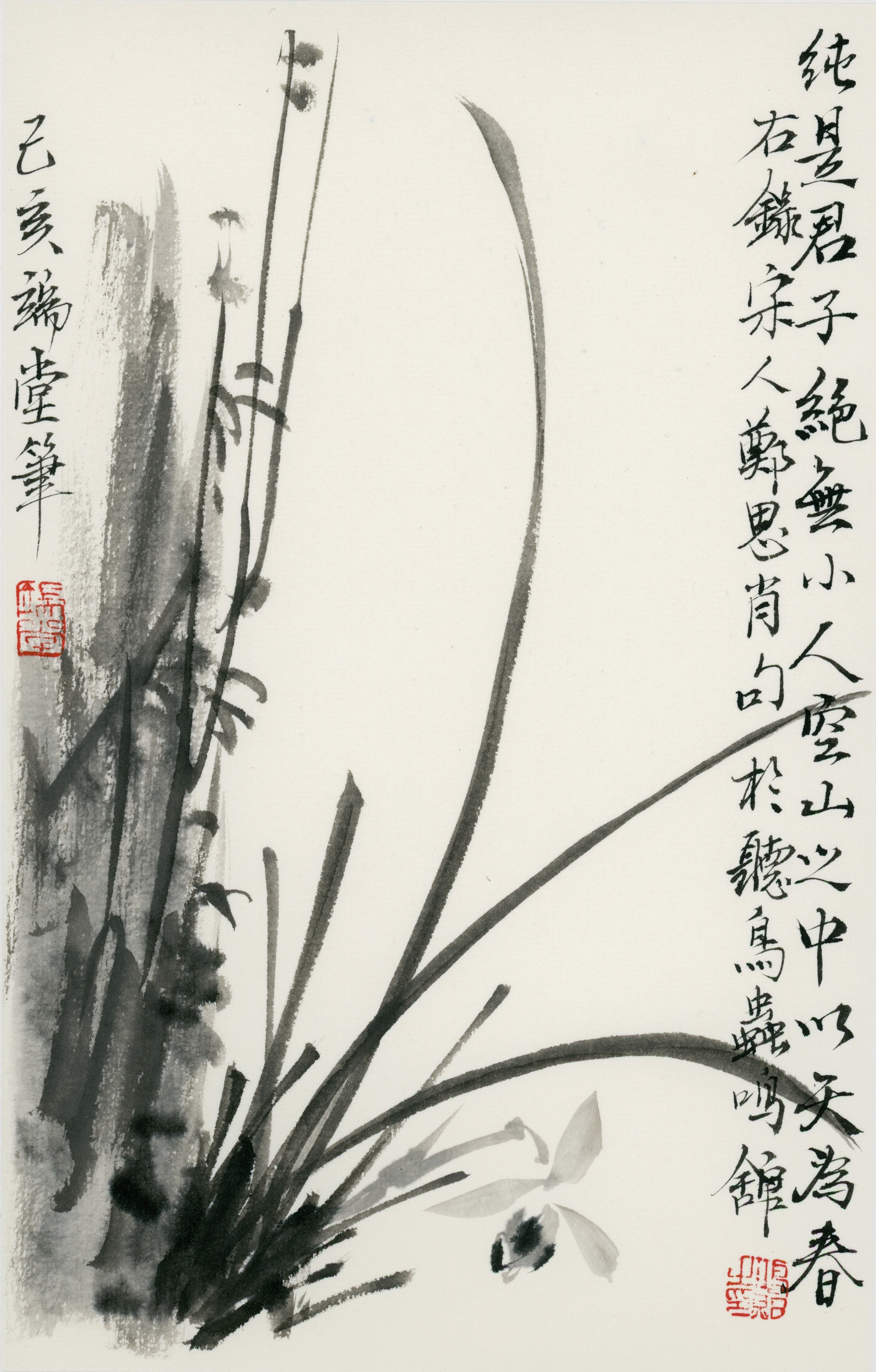
The inscription quotes Zheng Sixiao, a Song–Yuan transition poet and painter whose writings and orchid imagery became closely associated with moral integrity and steadfastness.
The orchid, traditionally admired for its fragrance and ability to flourish in secluded places, becomes an image of inner character rather than outward display.
Li's composition reinforces this association through economy of means.
The brushstrokes are expressive without being excessive, and the surrounding space allows the plant to retain an independent presence.
A related philosophical sensibility appears in Red Chrysanthemum (紅菊).
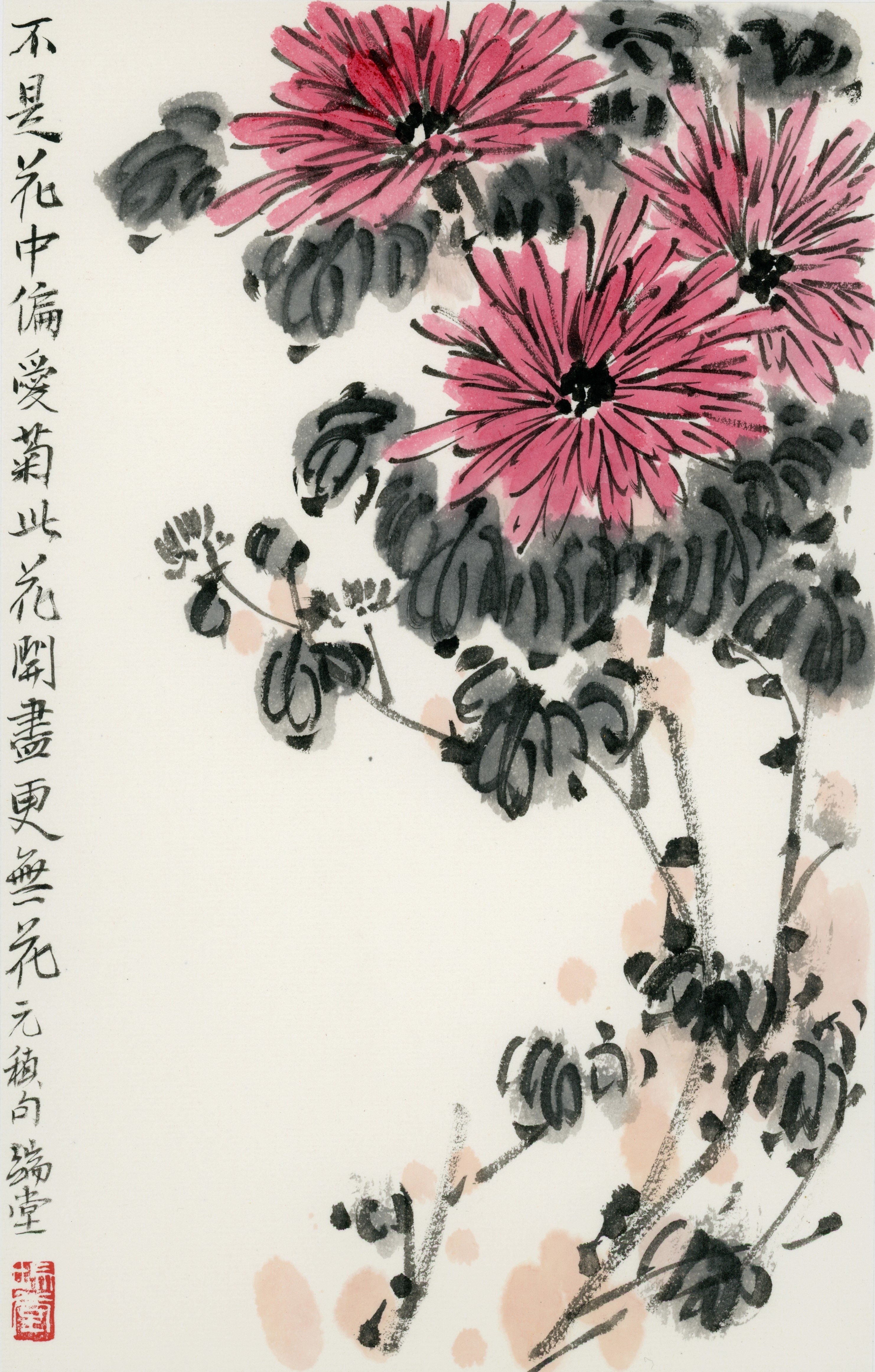
Here, Li quotes the Tang poet Yuan Zhen, whose celebrated verse expresses a special affection for chrysanthemums because they bloom when other flowers have largely disappeared.
The chrysanthemum's significance therefore extends beyond its color or shape. It suggests endurance, independence, and the beauty of remaining true to one's nature.
In Hosta Flowers (玉簪), the artist introduces another poetic association, quoting the Yuan dynasty writer Liu Minzhong.
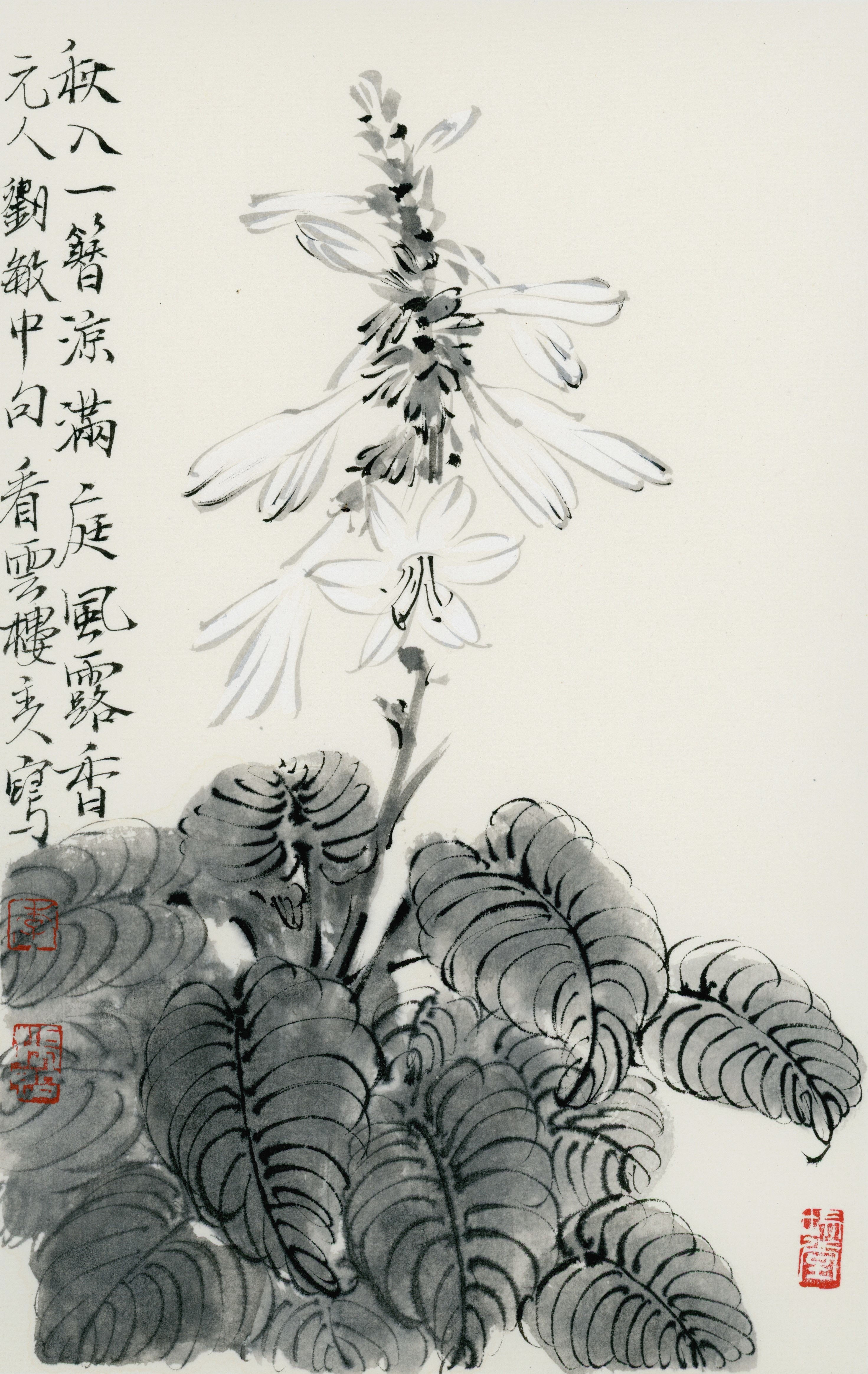
The inscription evokes autumn coolness, wind, dew, and fragrance, transforming the flowers into an expression of seasonal atmosphere.
Across these works, Li demonstrates that traditional floral symbolism need not be presented through elaborate narrative.
A few confident strokes, a carefully chosen inscription, and a sensitive arrangement of space may be sufficient to evoke an entire cultural world.
Brushwork, Ink, and the Art of Suggestion
The expressive quality of Li Hongzhao's paintings depends not only on their subjects but also on the relationship between brushwork and pictorial space.
Chinese ink painting places particular importance on the character of the brushstroke. A line may describe the edge of a leaf, but it also records the movement, pressure, rhythm, and intention of the artist's hand.
Li moves comfortably between the descriptive and the suggestive.
In Magnolia (玉蘭), the flowers are articulated through light ink and restrained touches of color. The composition emphasizes the elegance of the blossoms without requiring exhaustive botanical detail.
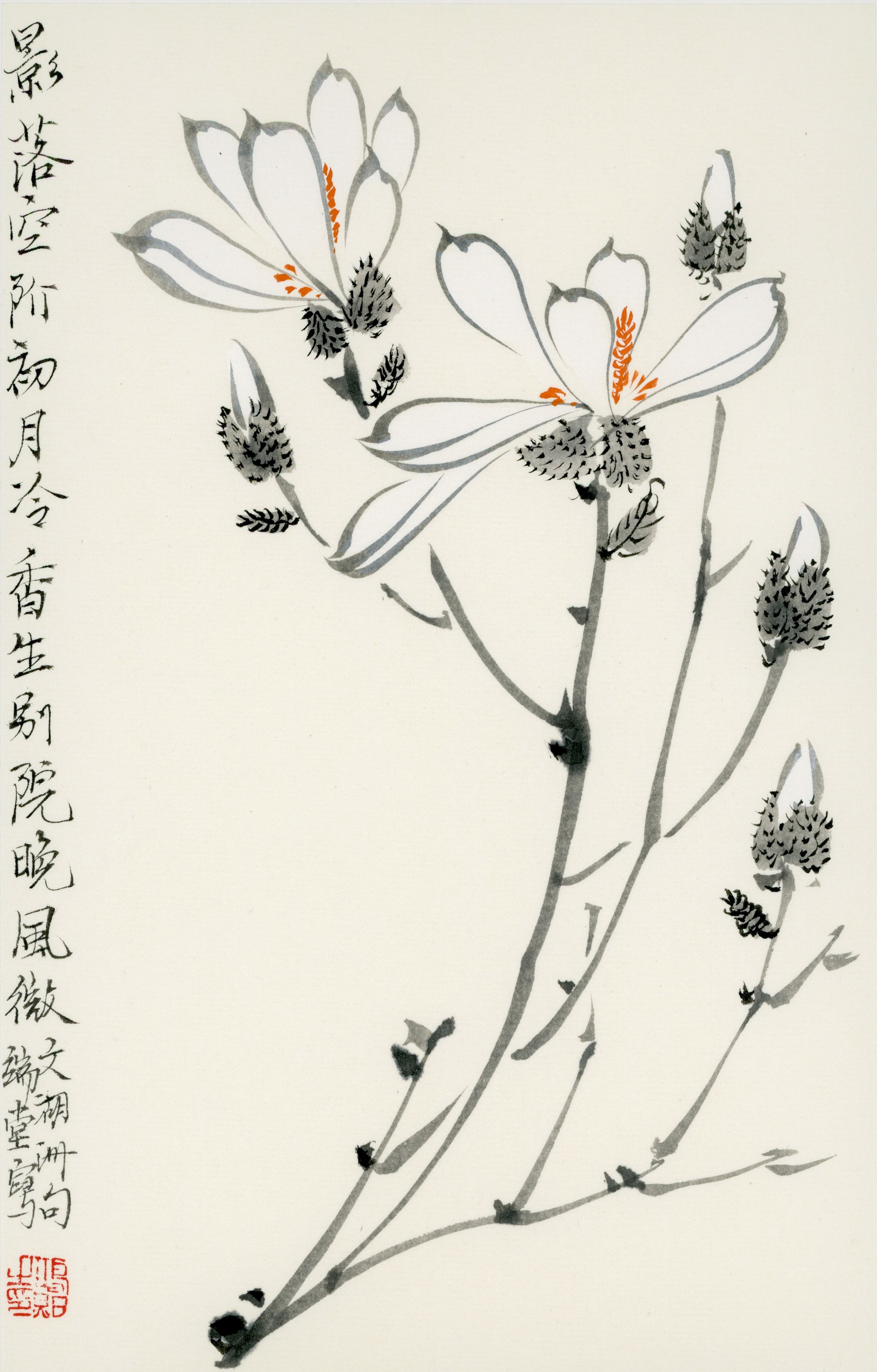
The inscription, drawn from a verse attributed to the Song painter and poet Wen Tong, introduces images of moonlight, shadows, fragrance, and evening wind.
These literary associations expand the painting beyond what is physically depicted.
The viewer is invited to imagine an atmosphere extending beyond the visible composition.
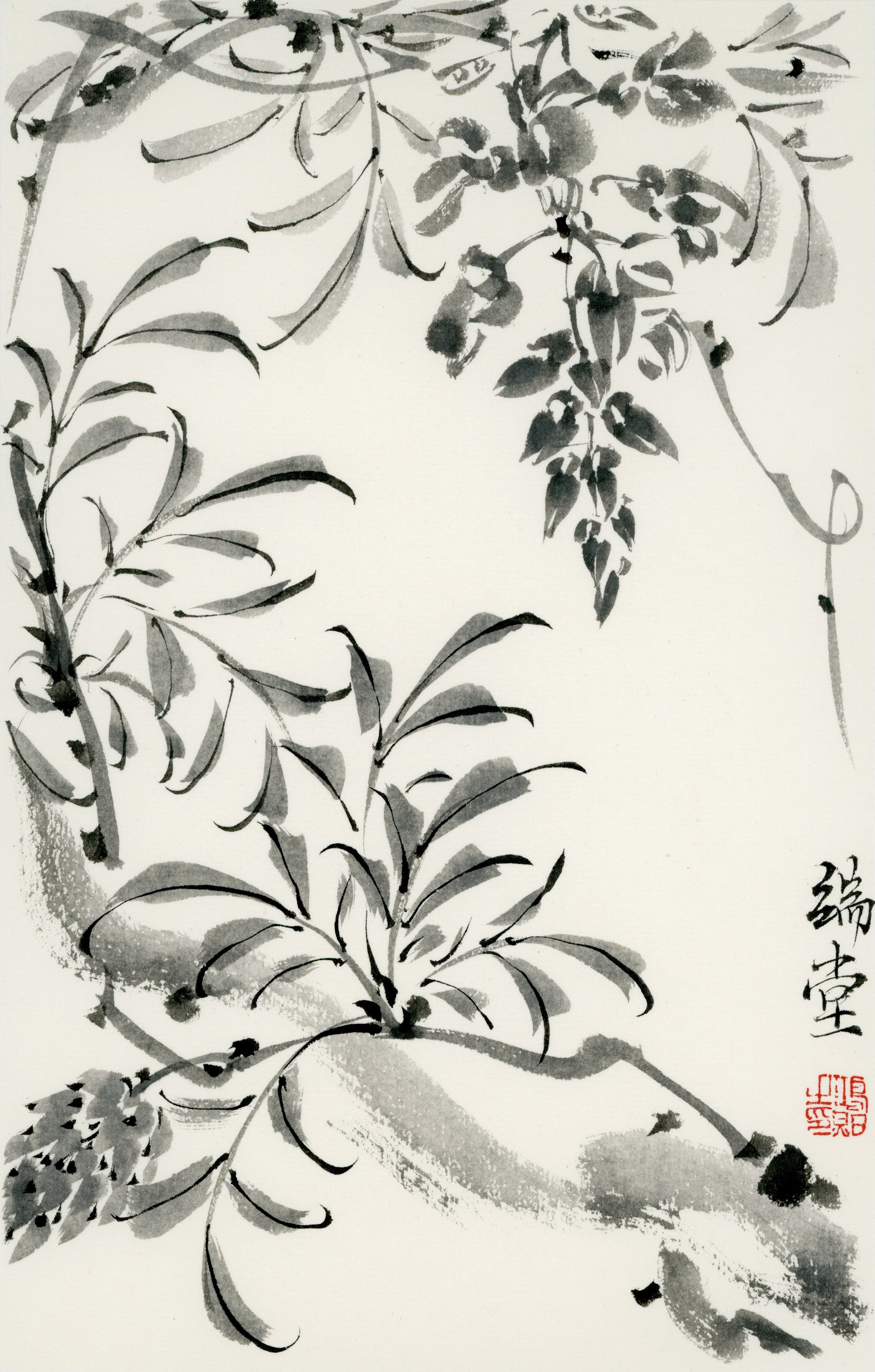
In Wisteria (紫藤), the hanging clusters and twisting vines provide a different opportunity for expressive brushwork. Variations in ink density establish rhythm and depth, while the descending forms create a natural sense of movement.
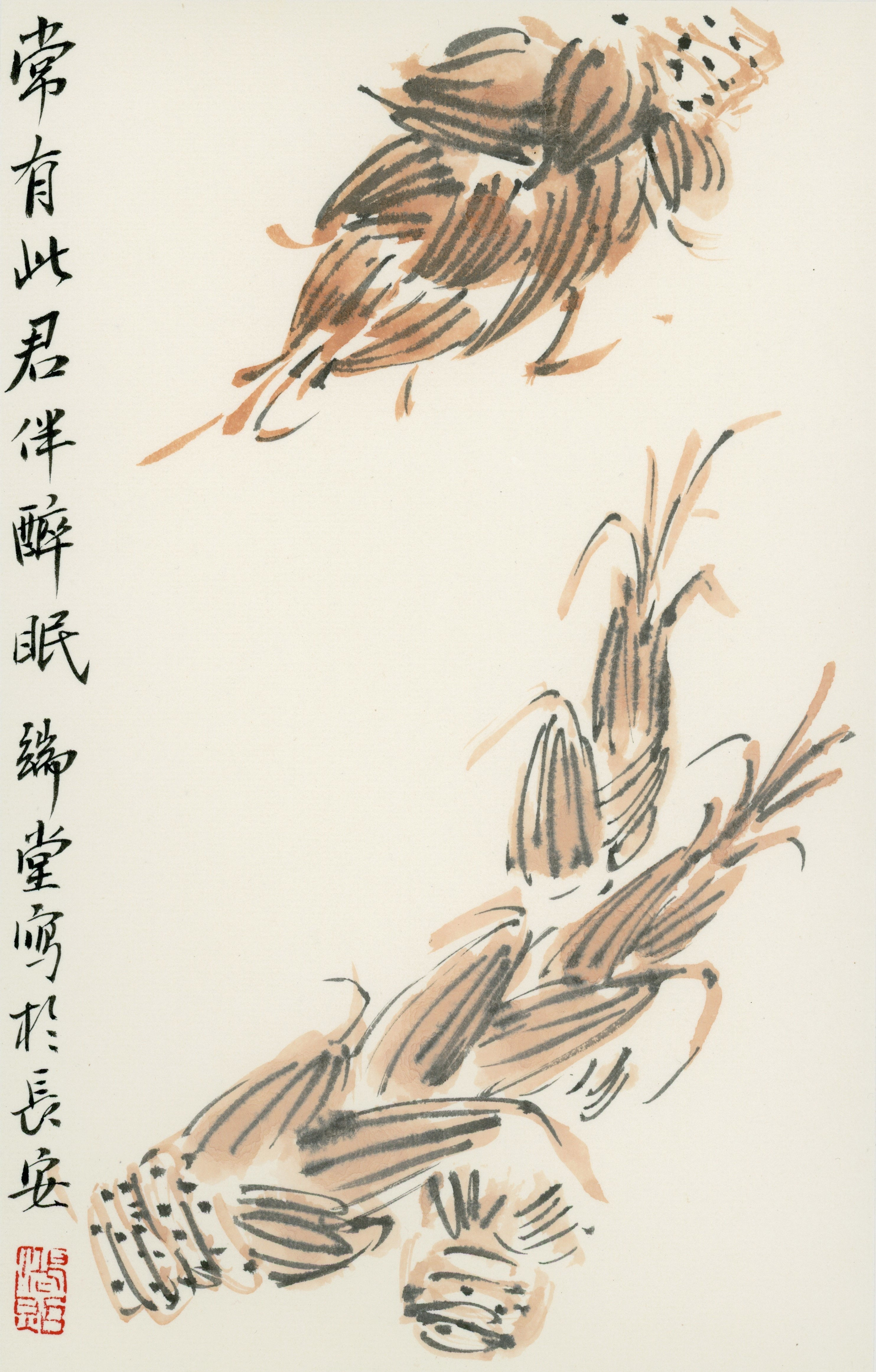
Bamboo Shoot (竹筍) offers a particularly engaging example of Li's personal approach to traditional subjects.
The inscription, "常有此君伴醉眠," introduces a playful literary dimension. The familiar personification of bamboo as "this gentleman" connects the subject to a long tradition of literati affection for bamboo, while the reference to wine and repose suggests a more relaxed and intimate mood.
Such details reveal an artist who does not treat classical painting as a rigid system of inherited conventions.
Instead, he uses its vocabulary to express his own observations, pleasures, and reflections.
A Dialogue Between Painting, Calligraphy, and Poetry
An essential characteristic of Flowers of Prosperity is the integration of image and written inscription.
In the Chinese literati tradition, painting and calligraphy are closely related arts. Both depend upon the expressive movement of the brush, and both can communicate the personality and cultivated sensibility of the artist.
An inscription may identify a subject, record a moment, recall a literary source, or introduce a meaning that is not immediately apparent in the image.
In Li's paintings, these functions frequently overlap.
The quotation from Bai Juyi in Peony introduces the theme of impermanence. The verse by Yuan Zhen in Red Chrysanthemum transforms a seasonal flower into an expression of character. The inscription in Cricket recalls the artist's childhood, while that in Hosta Flowers evokes the sensory atmosphere of autumn.
The inscriptions do not simply explain the pictures.
They create an additional dimension of experience.
The viewer first encounters the visual composition, then discovers another layer of meaning through the written words. The relationship between image and text encourages a slower, more attentive form of viewing.
The artist's seals further contribute to this relationship, introducing distinctive red accents and completing the traditional interplay of painting, calligraphy, and seal impressions.
Through this combination, each small painting becomes a self-contained poetic space.
Twelve Paintings, One Artistic Vision
The album format has a long history in Chinese painting.
Unlike a monumental hanging scroll, which may command attention through scale, an album encourages intimate and sequential viewing. Its individual leaves invite the viewer to consider each composition closely while discovering relationships across the collection.
Flowers of Prosperity draws upon this tradition through twelve works of consistent dimensions and related subjects.
The collection does not follow a single narrative in the conventional sense. Instead, it unfolds through changes of mood, subject, season, and artistic treatment.
The brilliance of peonies contrasts with the quiet refinement of orchids. The movement of swimming fish differs from the stillness of pear blossoms. The playful recollection of crickets offers a counterpoint to the literary seriousness of chrysanthemums.
These contrasts are essential to the collection's appeal.
Each painting retains its individuality, yet together the works reveal a coherent artistic personality: an artist equally attentive to beauty and humor, classical literature and personal memory, visual refinement and spontaneous expression.
The intimacy of their scale encourages close observation, while the variety of their subjects allows the collection to be experienced as a sequence of distinct encounters with nature.
Tradition as a Living Practice
Li Hongzhao's artistic career has developed within the academic and cultural environment of Xi'an, a city closely associated with the historical traditions of Chinese civilization.
After graduating from Xi'an Academy of Fine Arts in 1984, he continued his artistic studies and established a long career in painting and education.
His work reflects an enduring engagement with the classical foundations of Chinese painting, particularly the relationship between brushwork, literary culture, and the natural world.
Yet Flowers of Prosperity also demonstrates that traditional painting need not remain confined to the past.
The subjects may be familiar, but the artist's interpretation is personal.
The memories of childhood, the pleasure of observing flowers and insects, and the selection of poetic inscriptions all bring individual experience into dialogue with inherited artistic forms.
This balance between continuity and individuality is central to the vitality of contemporary Chinese ink painting.
Tradition survives not simply through the repetition of established motifs, but through the ability of artists to discover new meaning within them.
The Enduring Poetry of Nature
Viewed together, the twelve paintings of Flowers of Prosperity offer a quiet but compelling reflection on the relationship between art and life.
Flowers bloom and fade. Fish move through water. Insects recall childhood. Orchids and chrysanthemums suggest the values of integrity and independence.
The natural world becomes a language through which the artist expresses beauty, memory, character, and the passage of time.
Li Hongzhao does not seek to overwhelm the viewer through dramatic scale or elaborate spectacle.
Instead, he finds significance in modest subjects and familiar experiences.
A flower, a branch, a small insect, or a line of poetry becomes sufficient to open a larger field of imagination.
In this sense, Flowers of Prosperity continues one of the most enduring achievements of Chinese literati painting: the transformation of ordinary encounters with nature into expressions of human thought and feeling.
The twelve works may be appreciated individually, but together they offer a particularly rich understanding of Li Hongzhao's artistic world—one in which poetry, brushwork, memory, and nature remain inseparable.
Explore the Collection
The twelve original paintings in Flowers of Prosperity are presented by Sailup Arts. Each work is available for individual acquisition, and inquiries regarding the complete collection are welcome.
Explore the artist's work and discover the complete collection through Sailup Arts.