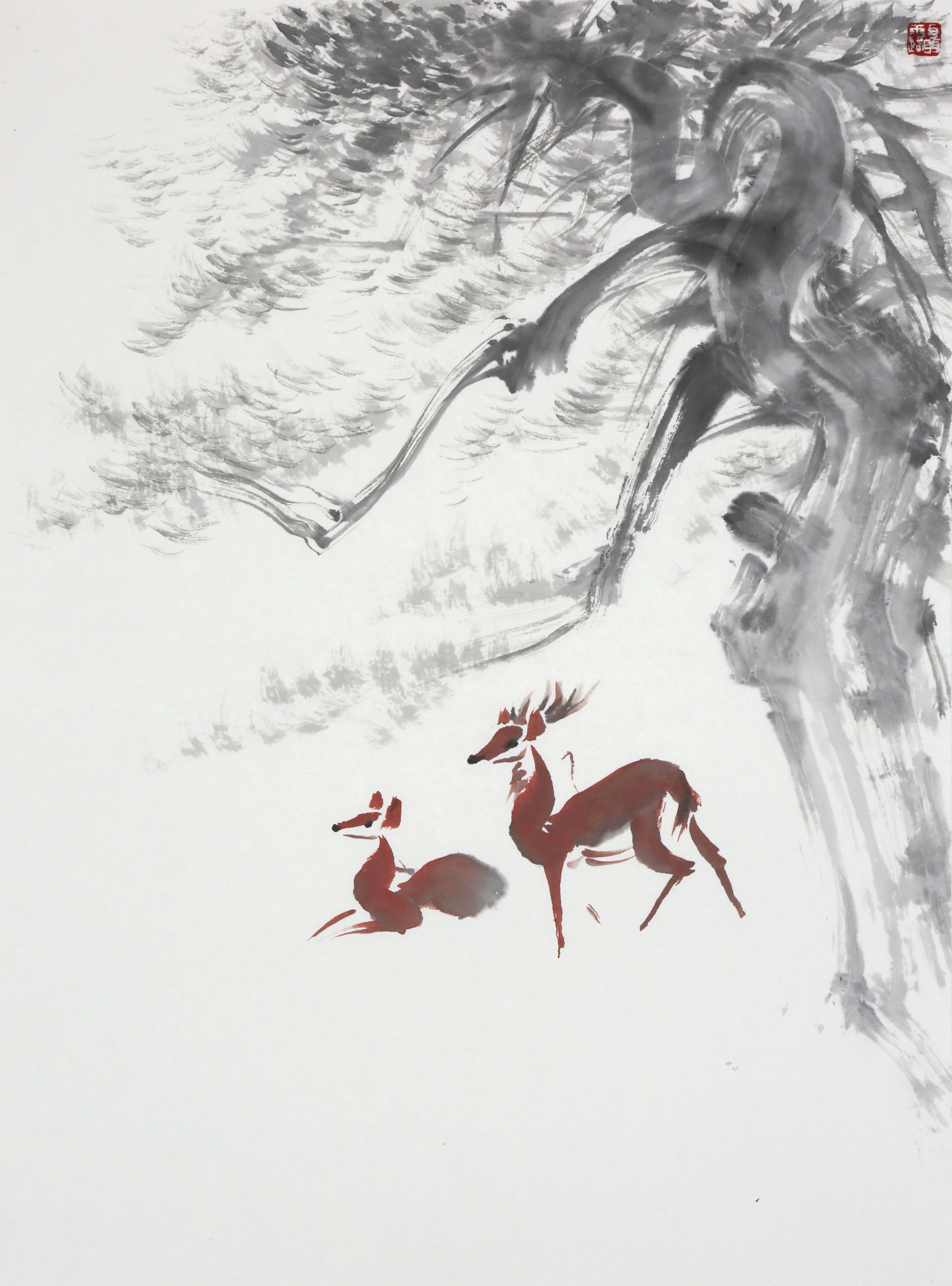
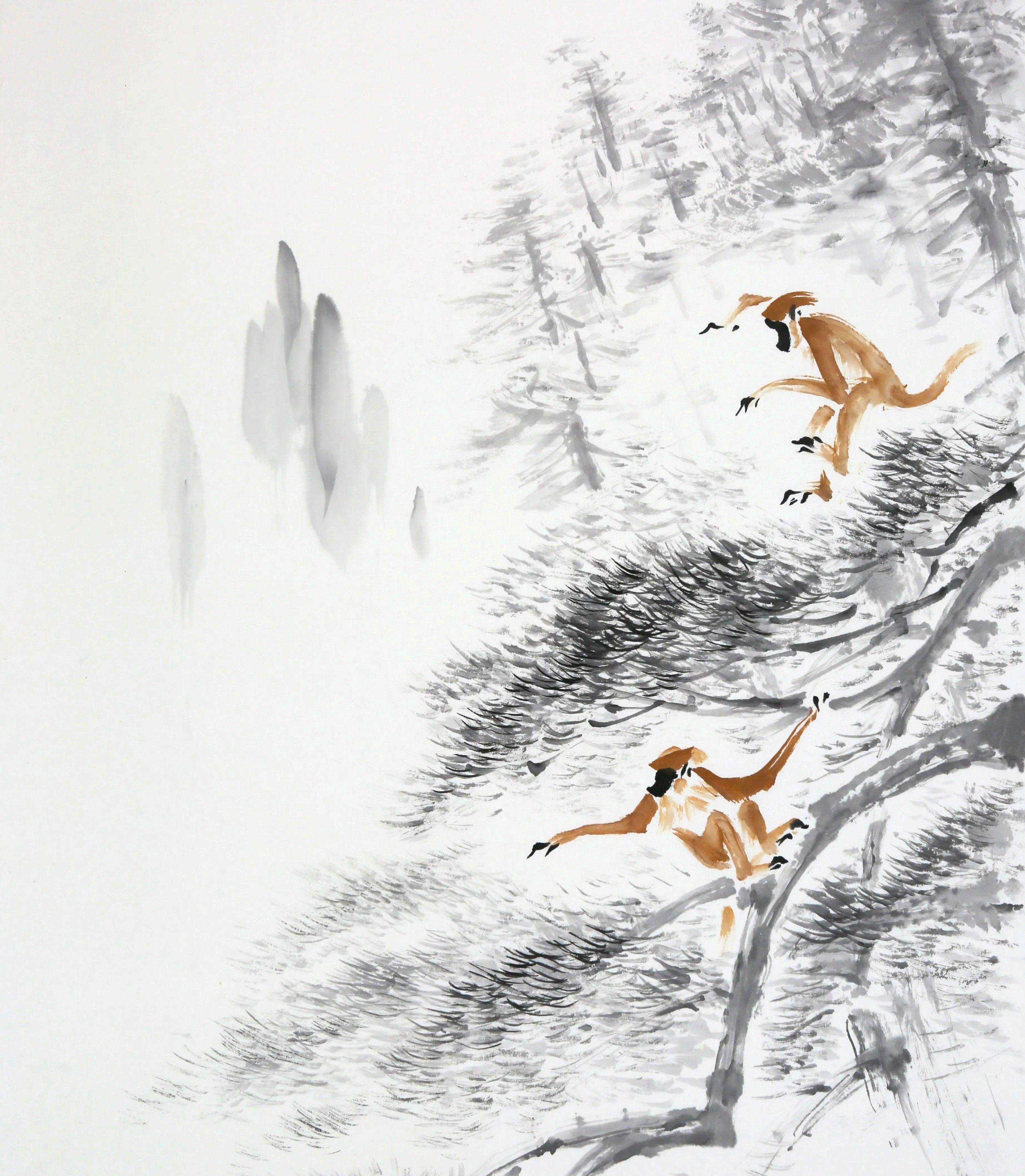
Nie Lu (b. 1968) is a contemporary Chinese painter whose work brings animals and landscapes into an intimate visual relationship. Monkeys, deer, tigers, streams, waterfalls, ancient trees, and mountain cliffs recur throughout his paintings, yet these elements are never presented simply as separate subjects. Instead, they form a living environment in which animals move, rest, observe, drink, and play.
This relationship between living creatures and the natural world is at the heart of Nie Lu's painting. Working primarily in ink and color on paper, he draws upon the long tradition of Chinese landscape and animal painting while giving familiar subjects a direct and contemporary vitality.
A World Where Animals Belong to the Landscape
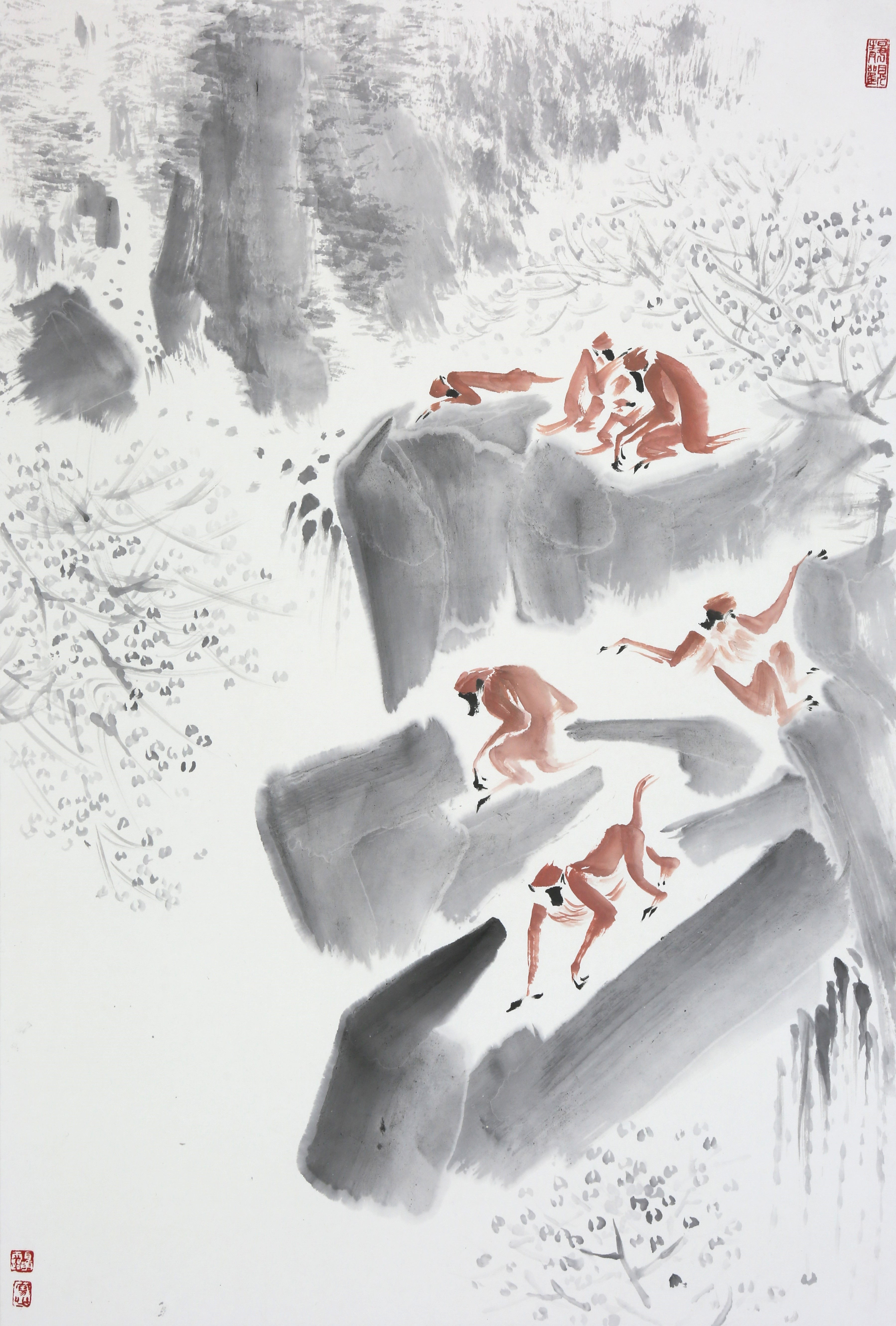
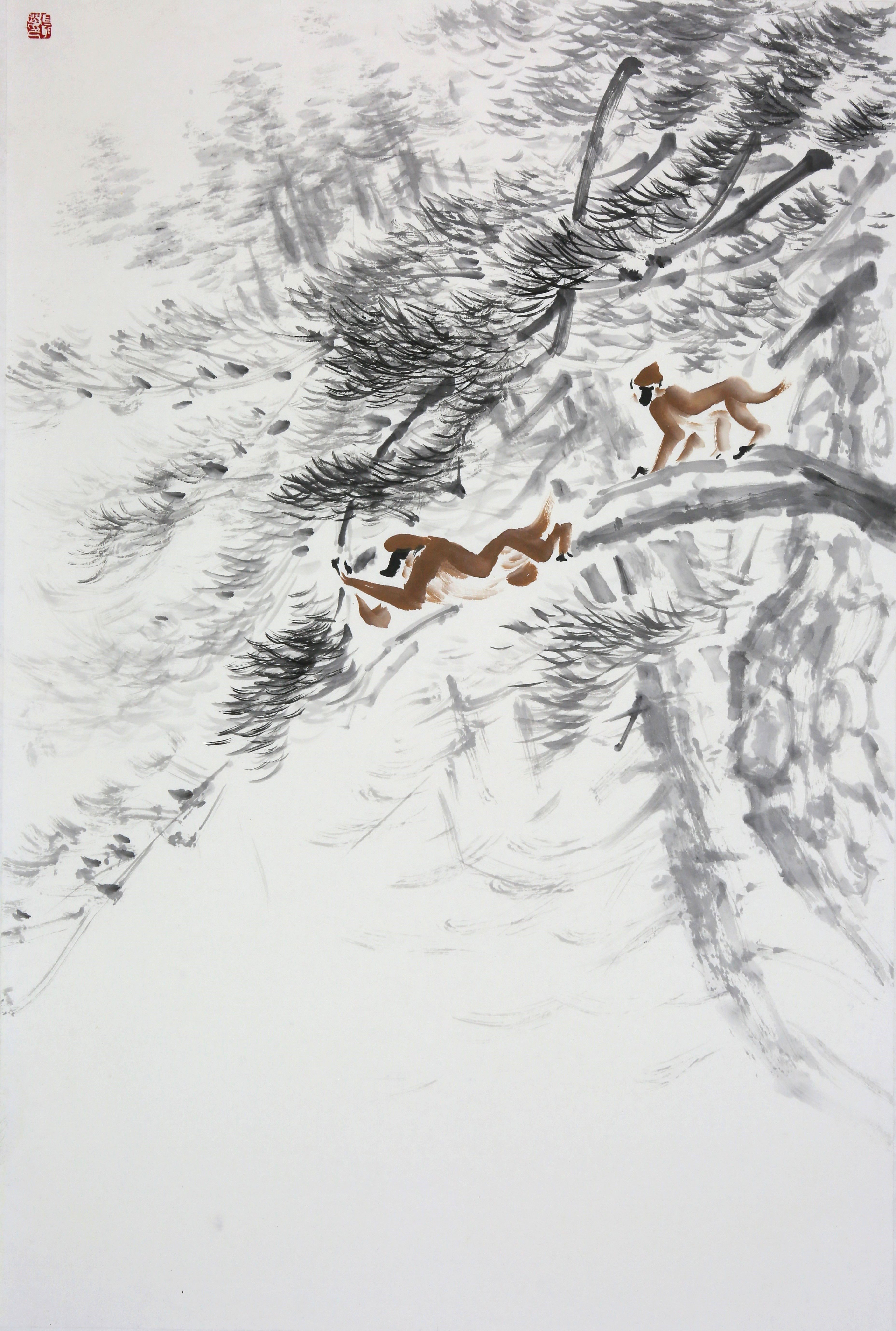
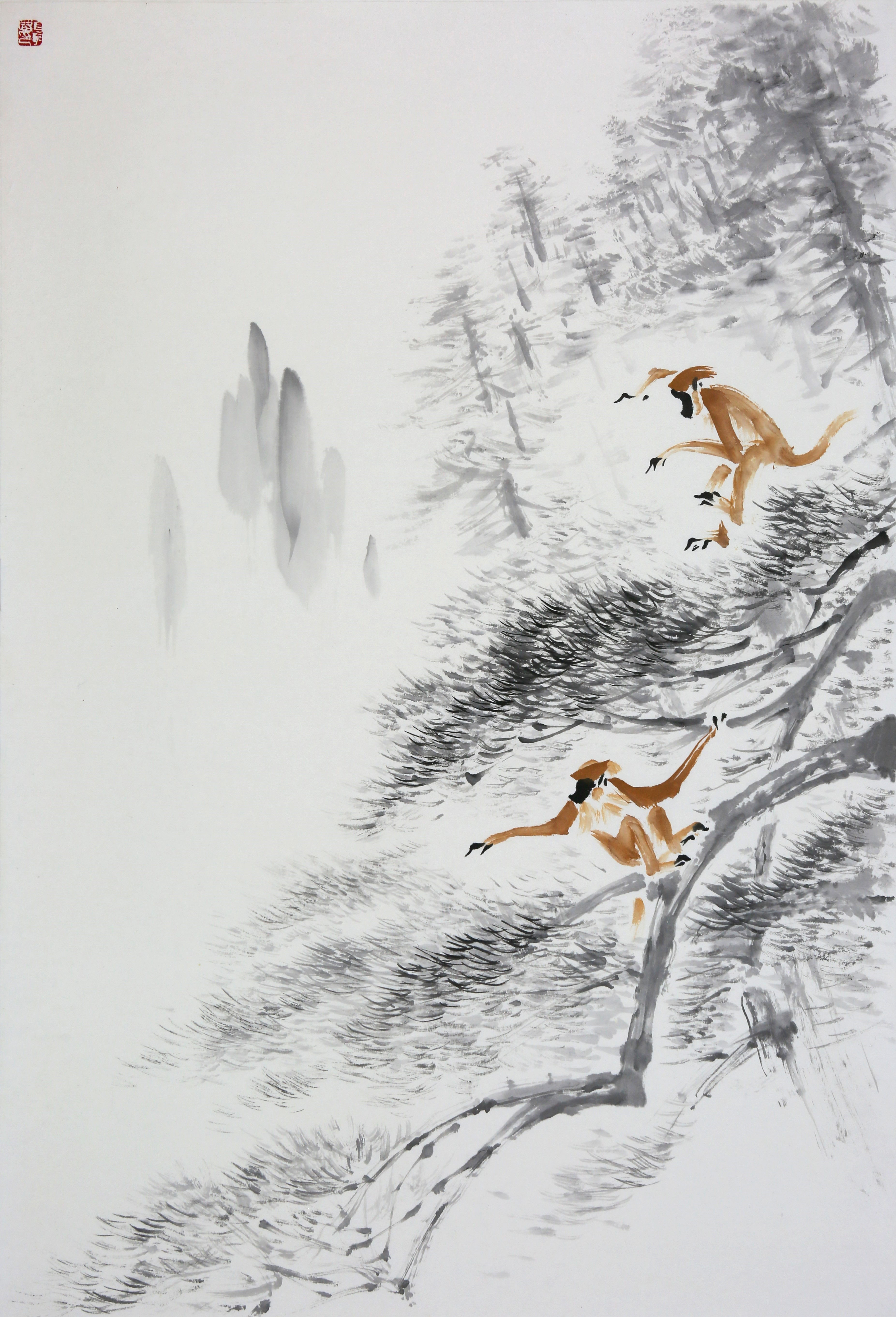
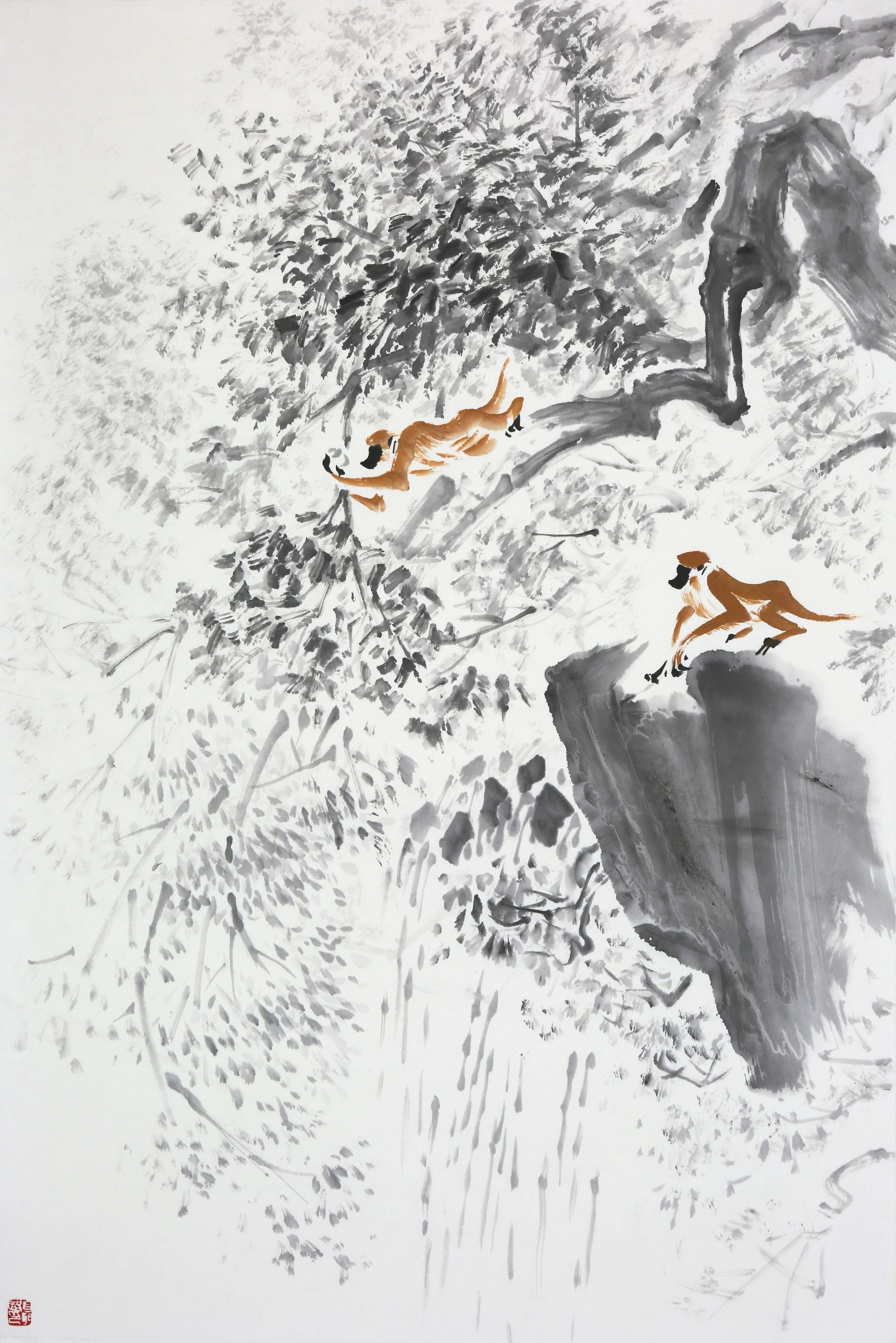
Among Nie Lu's most recognizable paintings are his depictions of monkeys. In Monkeys Playing by a Mountain Stream (山澗猿戲圖), Monkeys Playing Among Twin Pines (雙松戲猿圖), Two Monkeys Playing on the Pines (雙猿戲松圖), and Two Monkeys Watching a Waterfall (雙猿觀瀑圖), the animals become active participants in the landscape.
The monkeys are not isolated against an empty background. Rocks, trees, water, and waterfalls surround them and establish the larger rhythm of the composition. Their gestures introduce movement into otherwise quiet landscapes. A turning body, a raised head, or a moment of interaction between two animals can give the entire painting a sense of life.
This approach recalls an important principle in traditional Chinese painting: nature is not merely a backdrop for human or animal activity. It is an interconnected world in which every element participates in a larger rhythm.
Nie Lu's monkeys therefore serve more than a descriptive function. Their playfulness introduces humor, energy, and spontaneity into the composition. At the same time, their presence encourages the viewer to look more carefully at the surrounding landscape.
Deer, Water, and Quiet Observation
The deer paintings reveal another side of Nie Lu's artistic language.
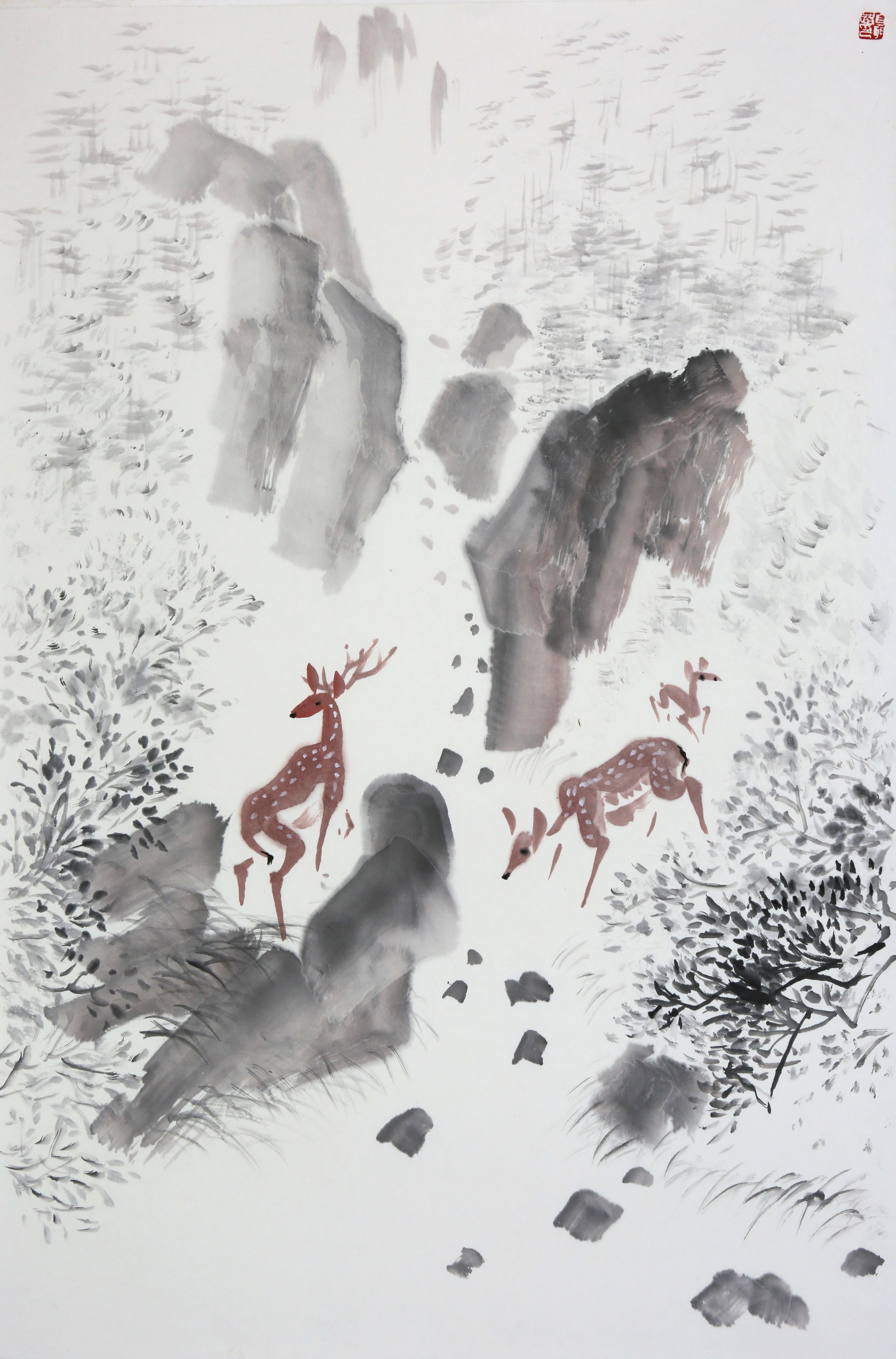
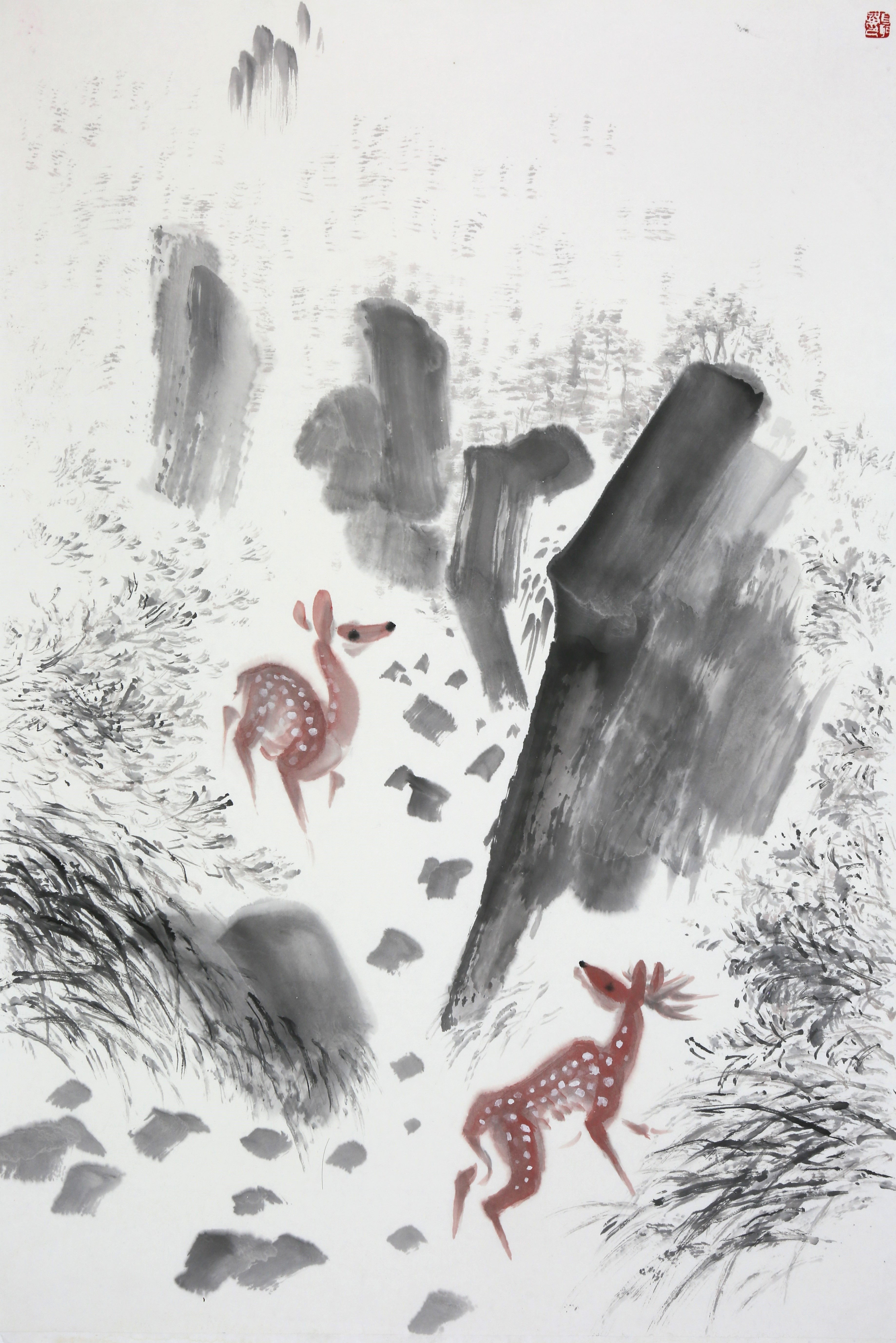
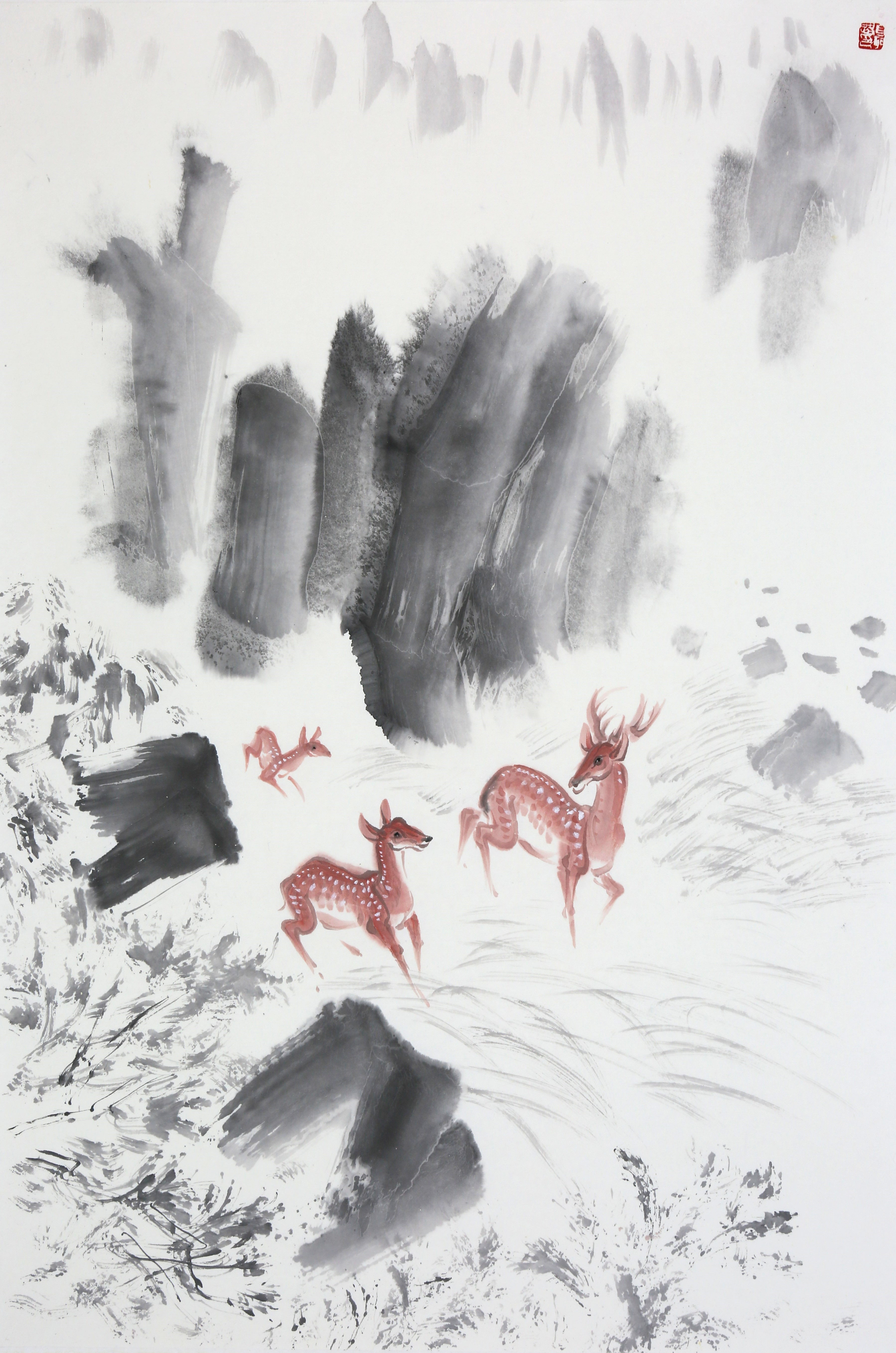
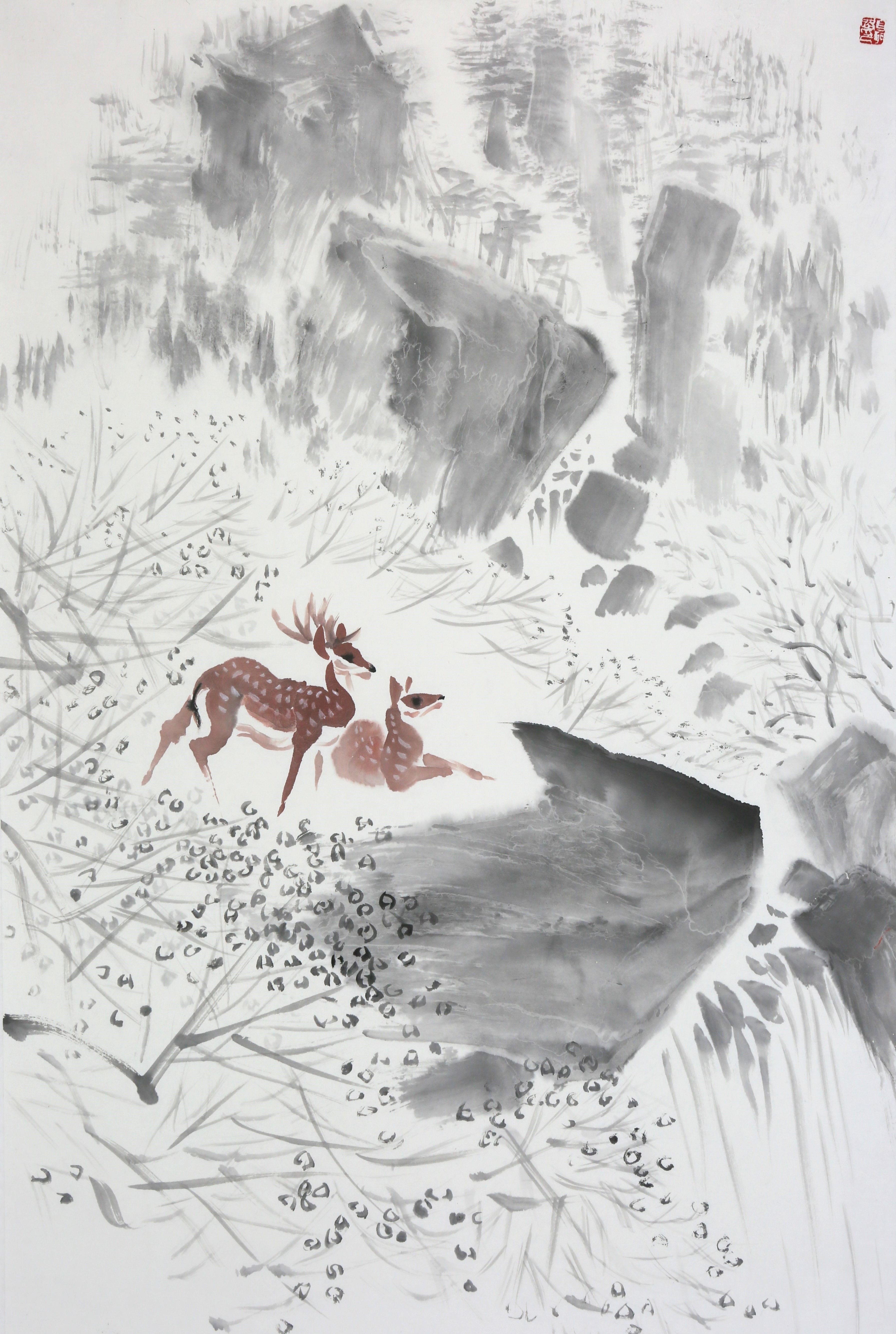
In Deer Drinking from a Mountain Stream (山溪鹿飲圖) and Two Deer by a Mountain Stream (山溪雙鹿圖), the animals appear in moments of calm. Rather than emphasizing dramatic action, Nie places the deer beside flowing water, allowing their stillness to contrast with the movement of the stream.
The effect is contemplative.
Water becomes one of the recurring visual elements in Nie's work. It connects different parts of the composition while creating an impression of continuous movement. The stream may begin in the distance, pass through rocks and vegetation, and finally become the space occupied by the animals.
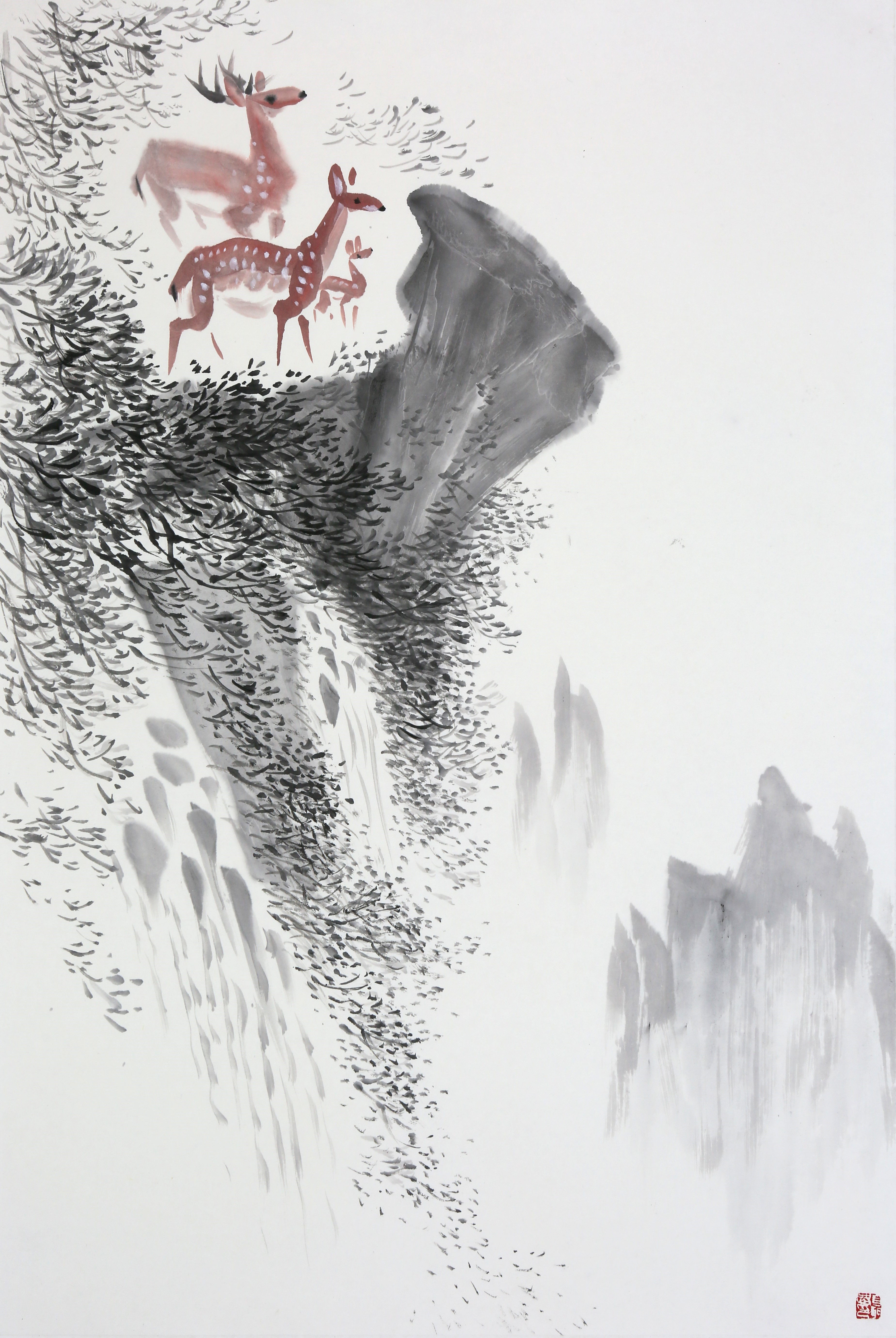
In Ancient Trees with Two Deer (古木雙鹿圖), the relationship becomes even more restrained. The deer appear beneath old trees, surrounded by an atmosphere of quietness and spaciousness. The painting suggests a world that exists independently of human activity—a moment observed rather than staged.
The Poetry of Pines and Waterfalls
Trees and waterfalls are equally important to Nie Lu's compositions.
The pine, one of the most enduring motifs in Chinese painting, traditionally carries associations with endurance, longevity, and strength. In Nie's paintings, however, the pine is not treated merely as a symbolic object. It becomes part of the physical environment inhabited by the animals.
This can be seen particularly clearly in Monkeys Playing Among Twin Pines and Two Monkeys Playing on the Pines. The vertical structure of the trees gives the composition stability, while the monkeys introduce movement and irregularity.
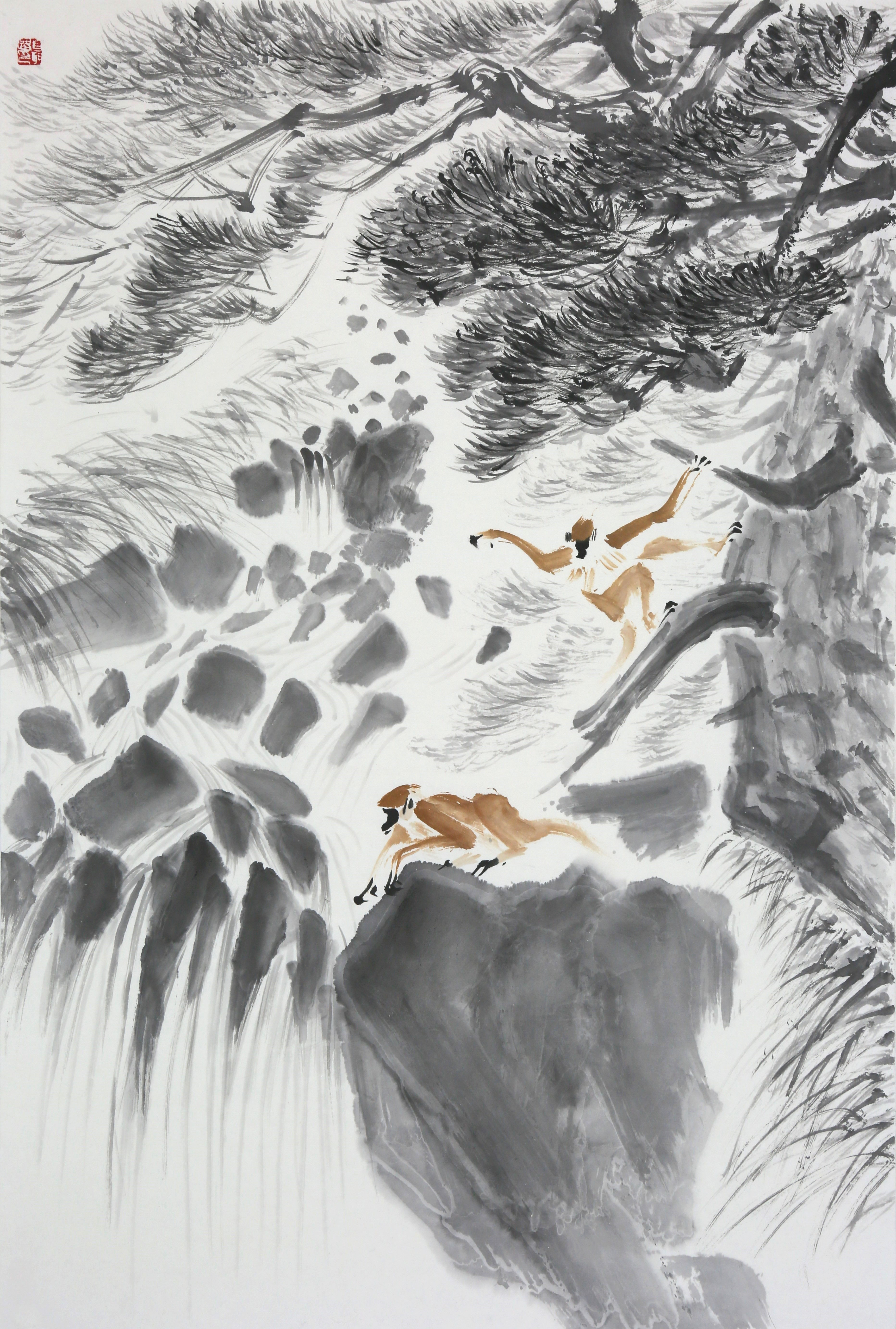
A similar relationship appears in the waterfall paintings. In Monkeys Playing by a Waterfall (飛瀑戲猿圖), water creates a strong vertical movement through the composition. The energetic presence of the monkeys contrasts with the continuous downward flow of the waterfall.
In Two Monkeys Watching a Waterfall, the relationship changes again. Instead of playing, the monkeys appear to observe the water. The viewer consequently becomes an observer as well.
This creates a subtle shift in the experience of the painting: we are not simply looking at monkeys and a waterfall, but sharing a moment of attention with the animals themselves.
Ink, Color, and the Rhythm of Brushwork
Nie Lu's paintings are executed in ink and color on paper, a medium that allows him to move between precise description and expressive brushwork.
His use of ink establishes the fundamental structure of the landscape. Darker passages give weight to rocks, tree trunks, and animal forms, while lighter washes open the composition and create atmospheric space.
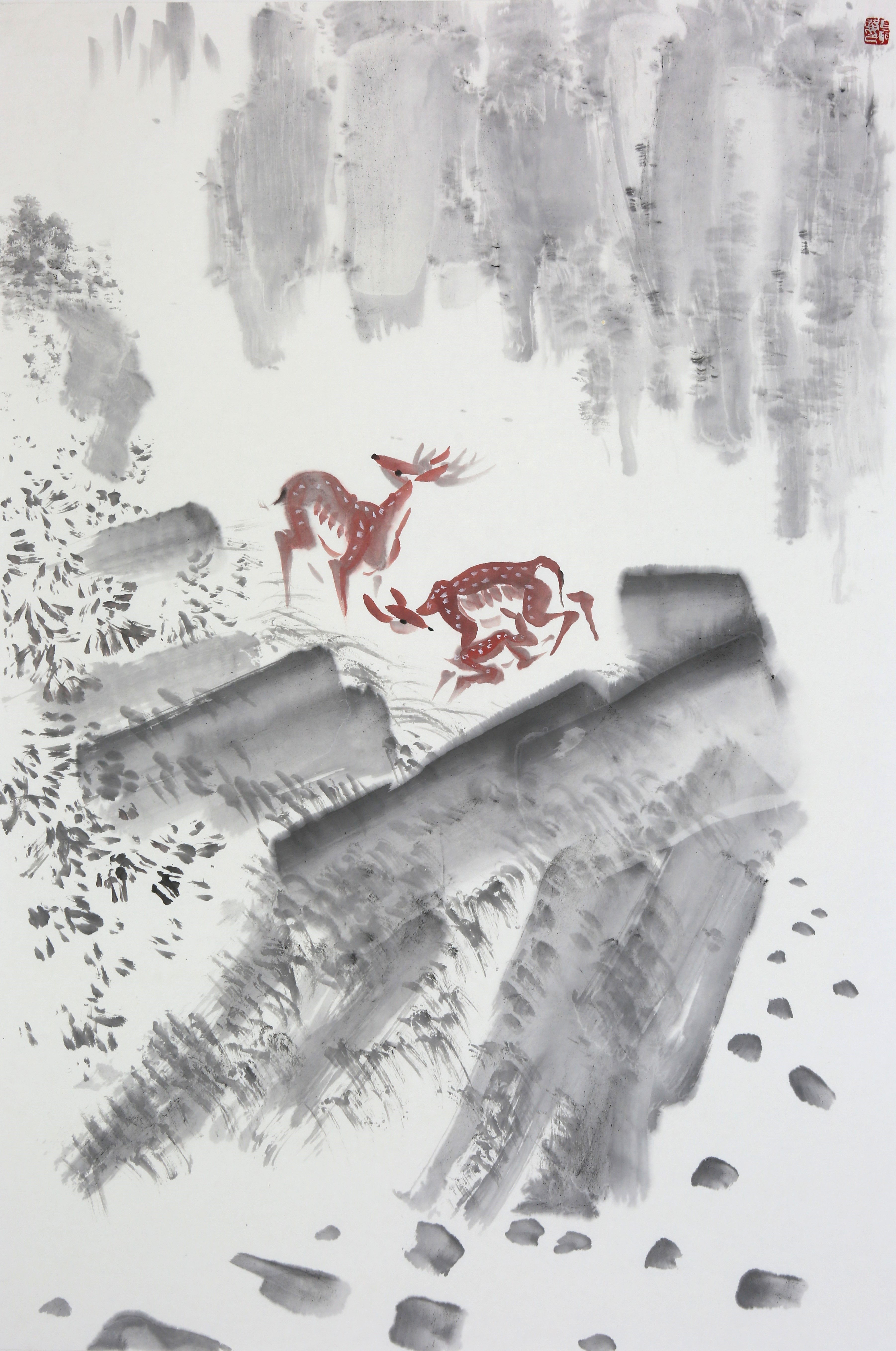
Color is used with restraint rather than overwhelming the ink. This allows the paintings to remain rooted in the visual language of Chinese ink painting while avoiding an overly monochromatic appearance.
The result is a balance between form and atmosphere.
Animals require a degree of descriptive precision: their bodies, gestures, and movements must remain recognizable. Landscape, by contrast, allows greater freedom of brushwork and suggestion. Nie brings these two modes together, allowing carefully observed animals to exist within landscapes constructed through broader and more expressive strokes.
This contrast gives his paintings much of their visual energy.
From Landscape to a Philosophy of Life
Although animals are among the most immediately recognizable subjects in Nie Lu's work, the deeper subject is arguably the relationship between life and environment.
A monkey playing beside a stream, a deer drinking from the water, or an animal resting beneath an ancient tree may appear to depict an ordinary moment. Yet the simplicity of these scenes creates space for contemplation.
There is little sense of conflict or dramatic narrative. Instead, the paintings emphasize coexistence.
The animals do not dominate nature, and nature does not overwhelm the animals. Each belongs to the same visual world.
This quality is especially evident in works such as Viewing Scenery by the Waterfall (臨瀑觀景圖), Leisure by the Flowing Stream (臨流閑憩圖), and Joyful Home by the Mountain Stream (山溪家樂圖). Here, human presence enters the landscape, but it remains integrated within the larger natural environment.
The stream, trees, rocks, and mountains are not merely scenery. They establish a rhythm of life in which people and animals share the same space.
A Contemporary Continuation of Chinese Painting
Nie Lu's work demonstrates that contemporary Chinese ink painting does not need to abandon traditional subjects in order to be contemporary.
Mountains, streams, pine trees, deer, monkeys, and waterfalls have appeared in Chinese painting for centuries. What changes from one generation to another is the artist's way of seeing them.
Nie's paintings retain the fundamental vocabulary of traditional Chinese painting—ink, brushwork, landscape space, animals, and the suggestion of atmosphere—while presenting these elements with a directness and vitality suited to contemporary viewing.
His compositions are accessible because their subjects are immediately recognizable. At the same time, their structure rewards slower looking. The viewer can begin with an animal or waterfall and gradually discover the larger relationships between foreground and distance, movement and stillness, darkness and light.
This balance between familiarity and contemplation gives the paintings their enduring appeal.
The Quiet Vitality of Nature
Taken together, the works presented here reveal a consistent artistic vision.
Nie Lu does not portray nature as an abstract ideal or as a dramatic spectacle. Instead, he finds poetry in moments of ordinary existence: monkeys playing among trees, deer approaching a stream, animals resting beneath ancient branches, or figures pausing beside flowing water.
His landscapes are therefore not empty spaces. They are inhabited worlds.
Water moves. Trees grow. Animals wander and play. People pause and observe.
Within this continuous movement, Nie Lu creates moments of stillness. His paintings invite the viewer to slow down and look—not only at the animal or the landscape, but at the relationship between them.
In this sense, his art continues one of the most enduring possibilities of Chinese painting: using a simple encounter with nature to suggest a larger reflection on life itself.