In Chinese culture, the gourd occupies a unique position between nature, symbolism, and literati aesthetics. Its pronunciation echoes the words for “fortune” and “prosperity” (福祿), making it a longstanding emblem of blessing, abundance, longevity, and continuity. The endlessly extending vines and clustered fruits further suggest vitality and flourishing life. For centuries, the motif has appeared in painting, decorative arts, folk traditions, and scholarly studios alike. Yet in the hands of a mature ink painter, the gourd becomes far more than an auspicious symbol—it becomes a vehicle for the expressive possibilities of brush and ink.
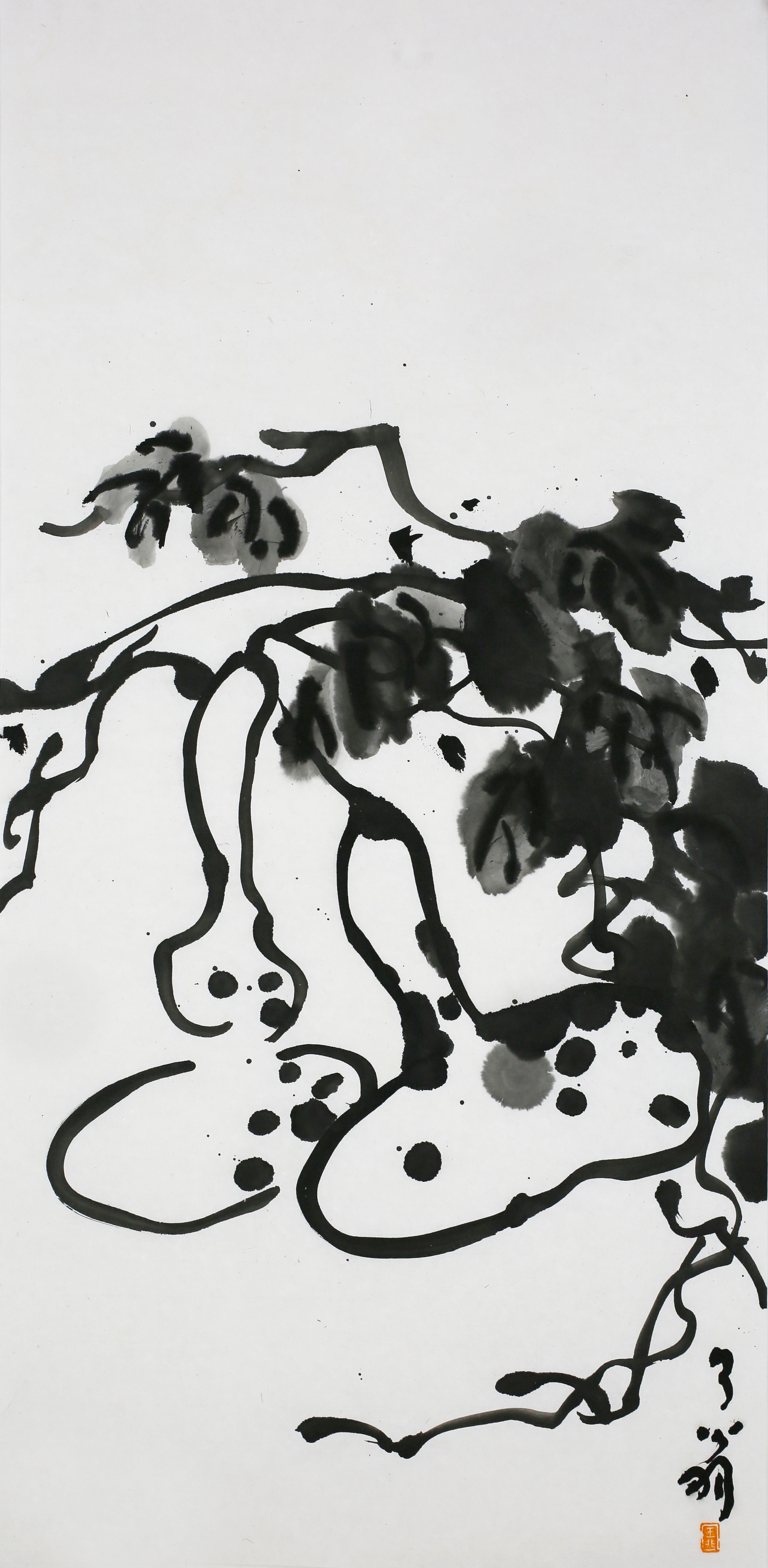
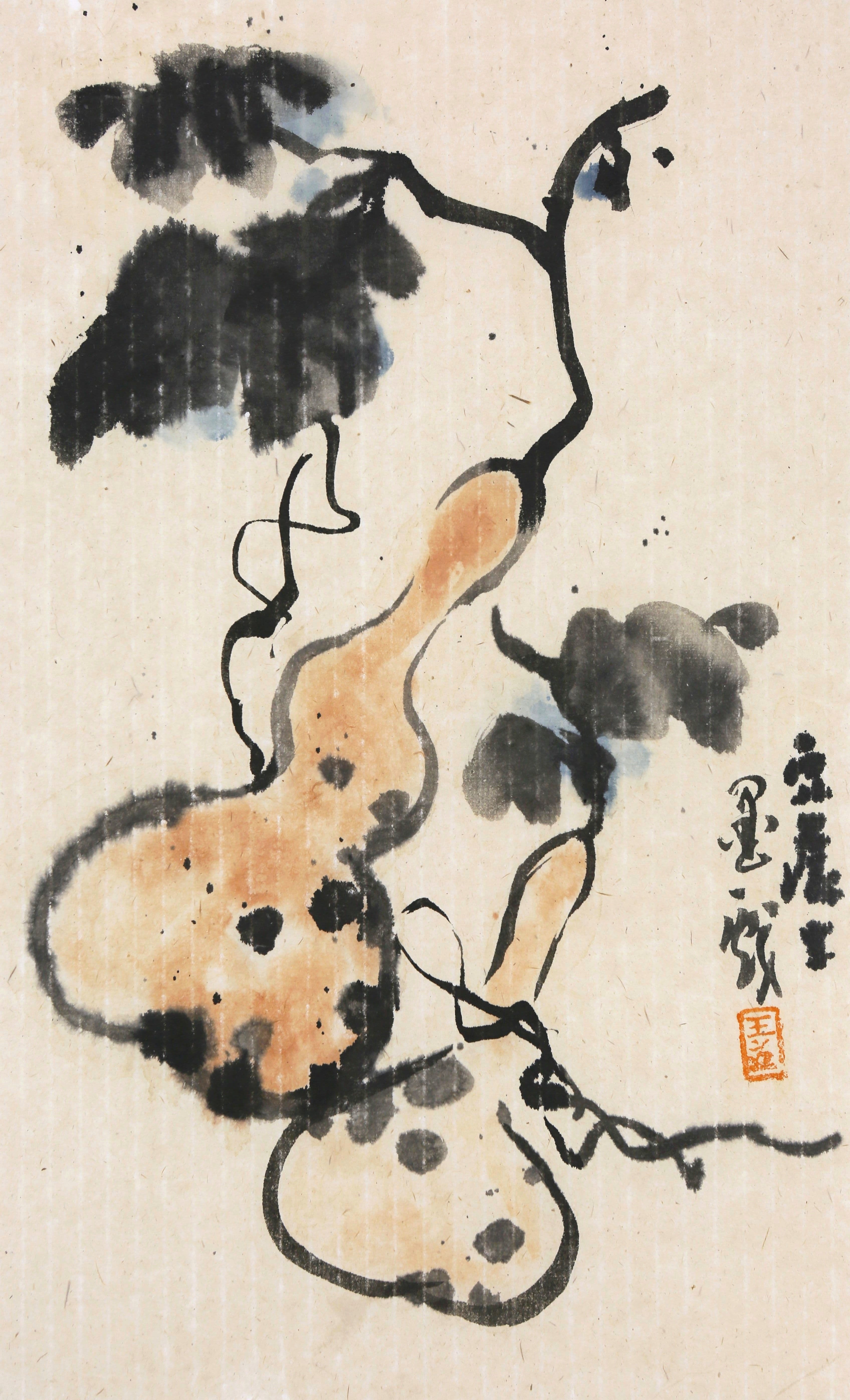
The six gourd paintings presented by Wang Fei reveal precisely this transformation. At first glance, the works appear spontaneous and unrestrained: hanging gourds sway among twisting vines, leaves spread and overlap in seemingly effortless rhythms, and washes of ink drift between density and emptiness. But beneath this sense of natural ease lies remarkable technical control. The paintings demonstrate a profound understanding of brush movement, ink tonality, compositional balance, and the structural principles of Chinese literati painting.
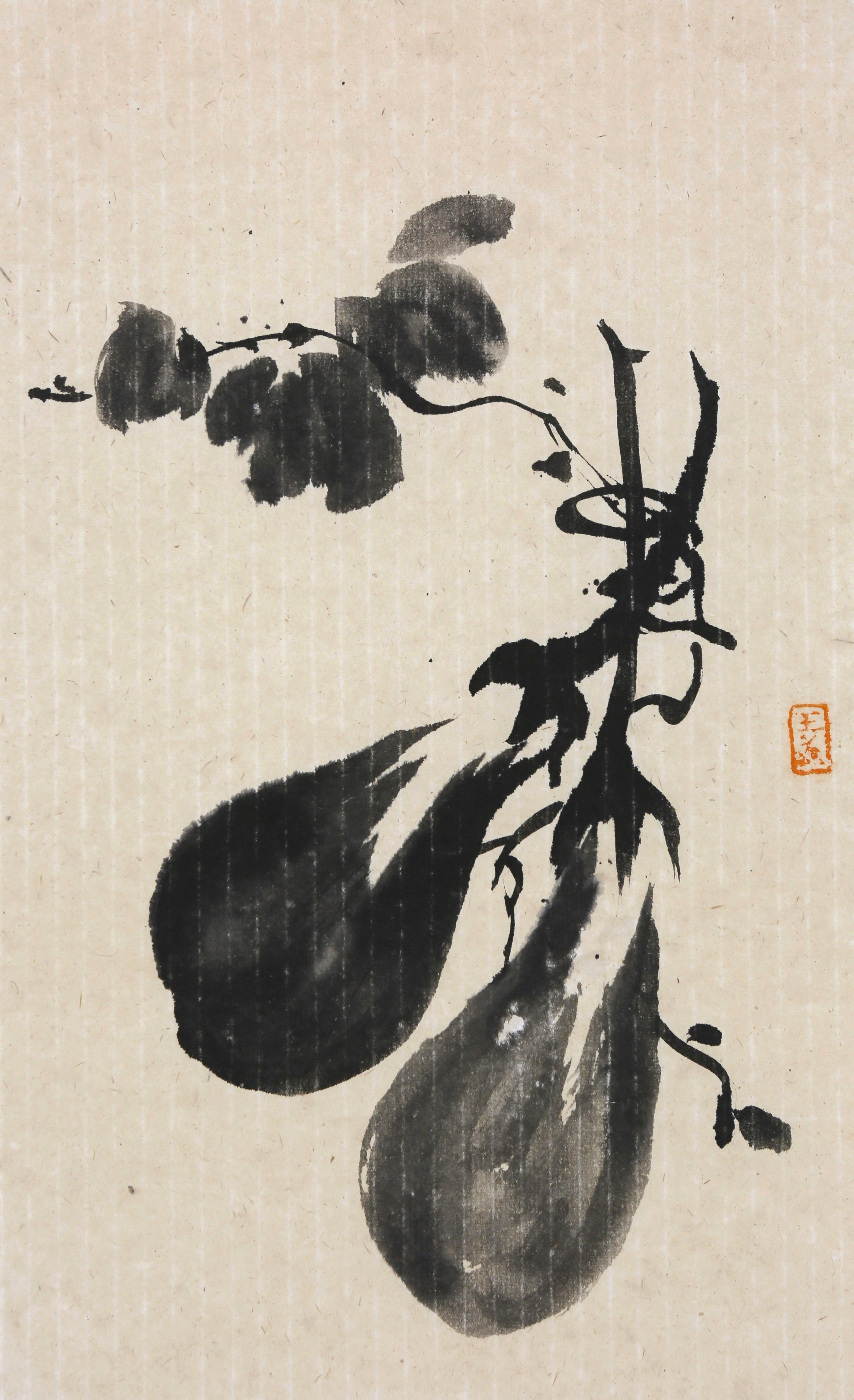
One of the most striking aspects of Wang Fei’s work is the calligraphic quality of his brushwork. The vines twist across the surface like cursive script, at times vigorous and angular, at times supple and fluid. Leaves are rendered with abbreviated yet highly expressive strokes, where variations of dry and wet ink create both texture and atmosphere. The gourds themselves often emerge through restrained outlines and tonal modeling rather than excessive detail, preserving the freshness and immediacy central to xieyi (寫意, freehand) aesthetics.
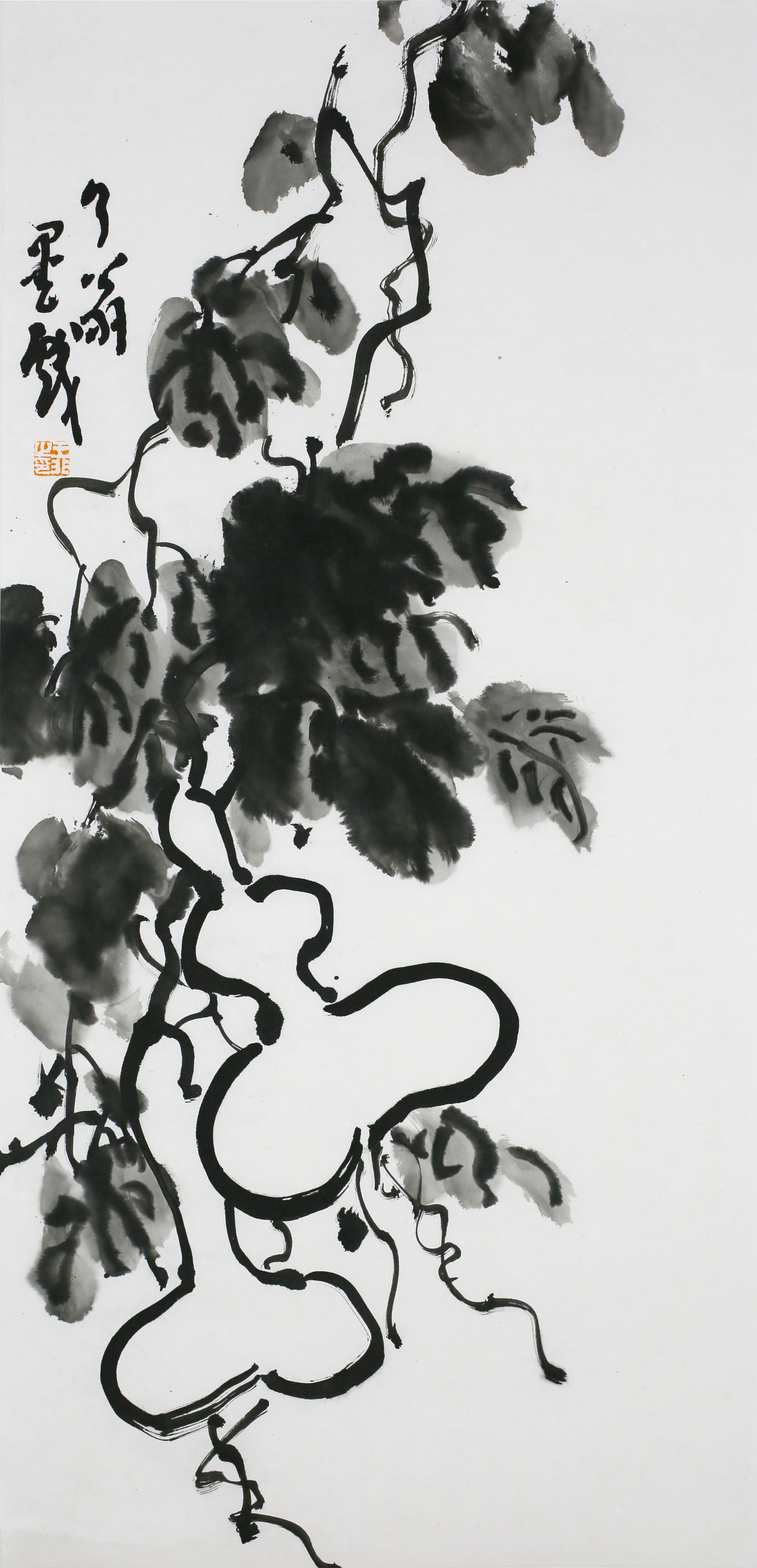
This approach reflects an important principle in Chinese painting: the goal is not photographic representation, but the conveyance of vitality, rhythm, and spirit. In Wang Fei’s paintings, the forms remain recognizable, yet they are animated by the movement of the brush itself. The viewer senses not only the image of gourds and vines, but also the physical energy of the artist’s hand and the temporal flow of the painting process.
Equally important is Wang Fei’s handling of empty space. Rather than filling every area with imagery, he allows blank paper to function as breathing space within the composition. This interplay between the painted and unpainted recalls the traditional Chinese concept of liubai (留白), where emptiness is treated not as absence but as a field of imagination and resonance. The suspended gourds and drifting leaves therefore seem to exist within an atmosphere rather than against a fixed background.
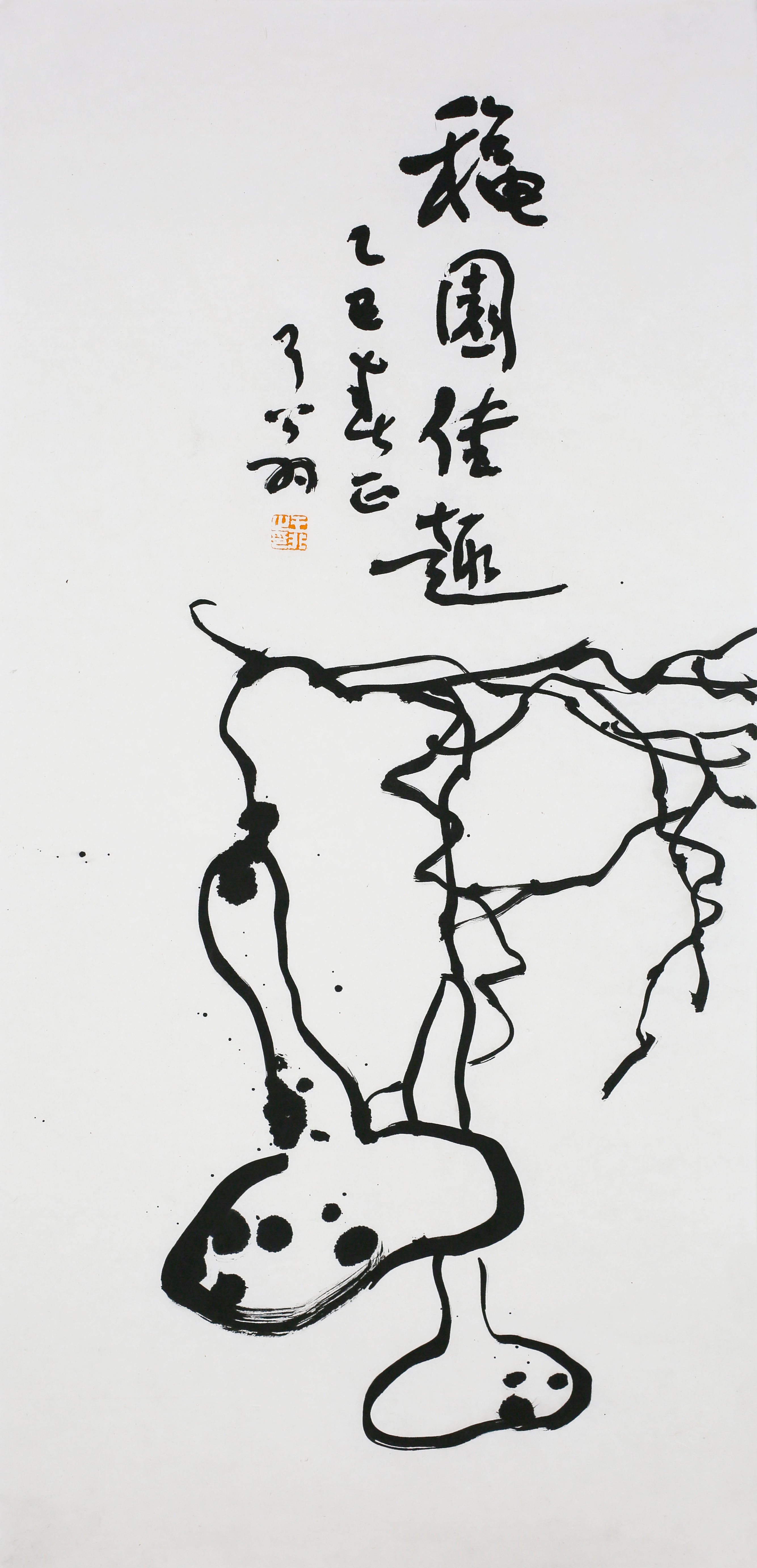
The inscriptions found throughout the works further deepen their literati character. Phrases such as “Ink Play” and “Autumn Garden Delight” transform the paintings into reflections of temperament and cultivated leisure. In traditional Chinese aesthetics, painting was never merely an act of depiction; it was closely tied to poetry, calligraphy, self-cultivation, and personal expression. Wang Fei’s works continue this tradition while presenting it in a contemporary visual language.
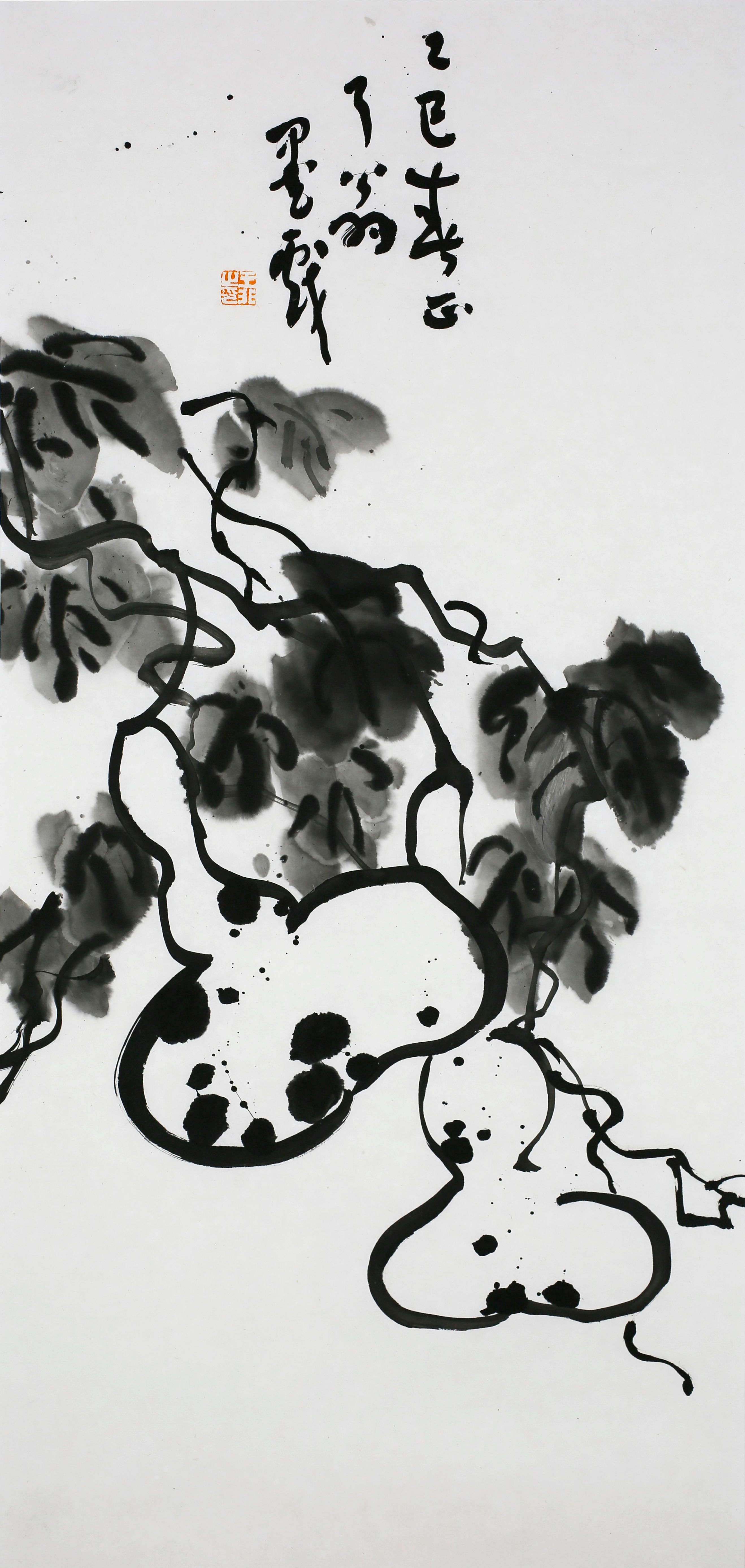
What makes these paintings especially compelling is their balance between discipline and freedom. The brushwork appears spontaneous, yet every stroke reveals years of training and refinement. Dense ink passages contrast with pale washes; bold structural movements are softened by subtle tonal transitions. The result is a body of work that feels both energetic and meditative—deeply rooted in the history of Chinese ink art while remaining visually immediate for contemporary audiences.
In Wang Fei’s hands, the humble gourd transcends botanical subject matter and becomes a meditation on rhythm, vitality, and the enduring expressive power of ink. Through these paintings, viewers encounter not only a traditional symbol of auspiciousness, but also the living spirit of literati painting itself.