Among the countless images that have shaped Chinese culture, few are as enduring as the butterfly. Delicate yet resilient, fleeting yet timeless, it has long symbolized beauty, transformation, freedom, and the mysterious relationship between humanity and nature. In Chinese philosophy, however, the butterfly carries an even deeper meaning—one that reaches beyond the visible world into questions of consciousness and reality.
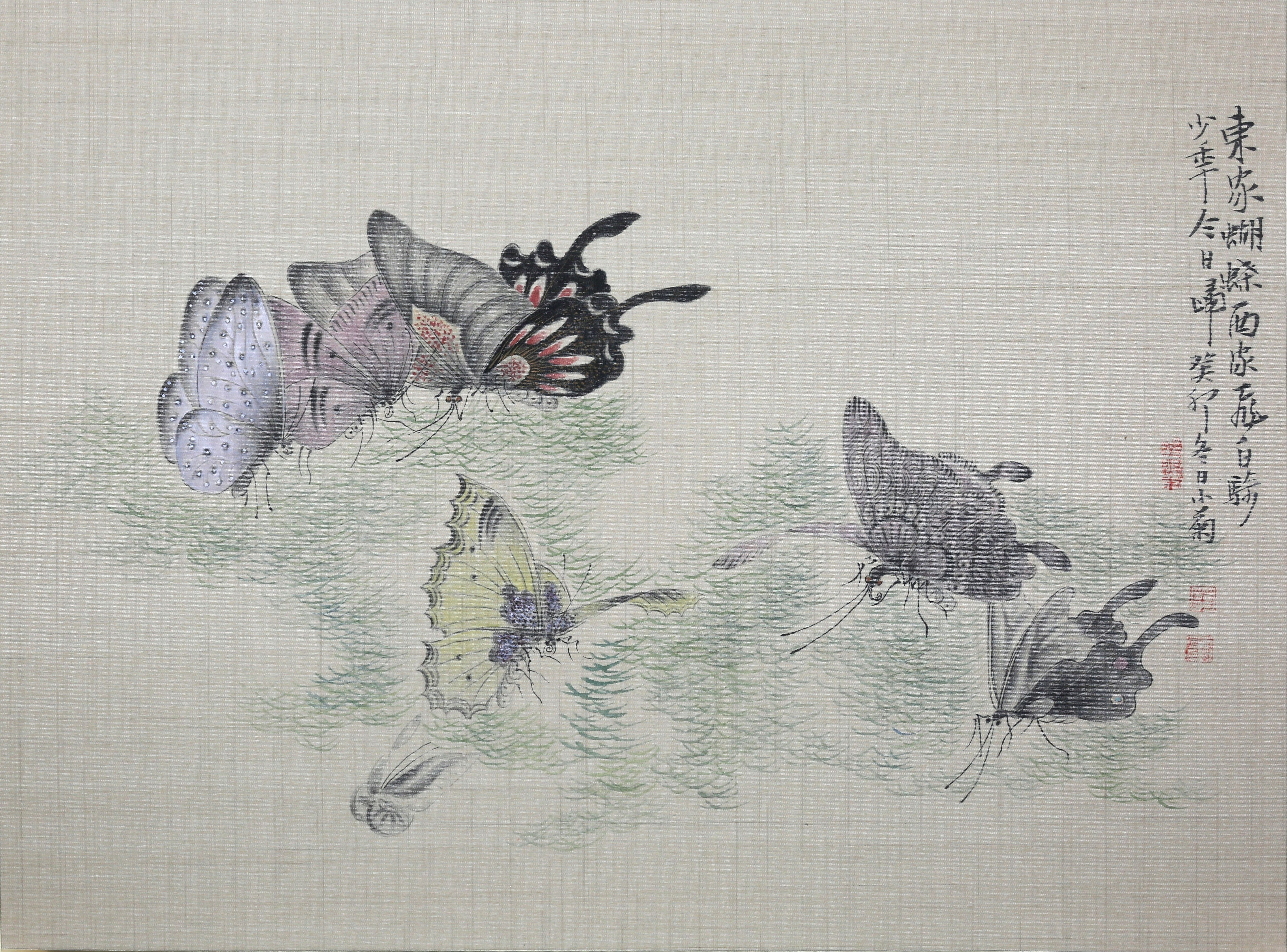
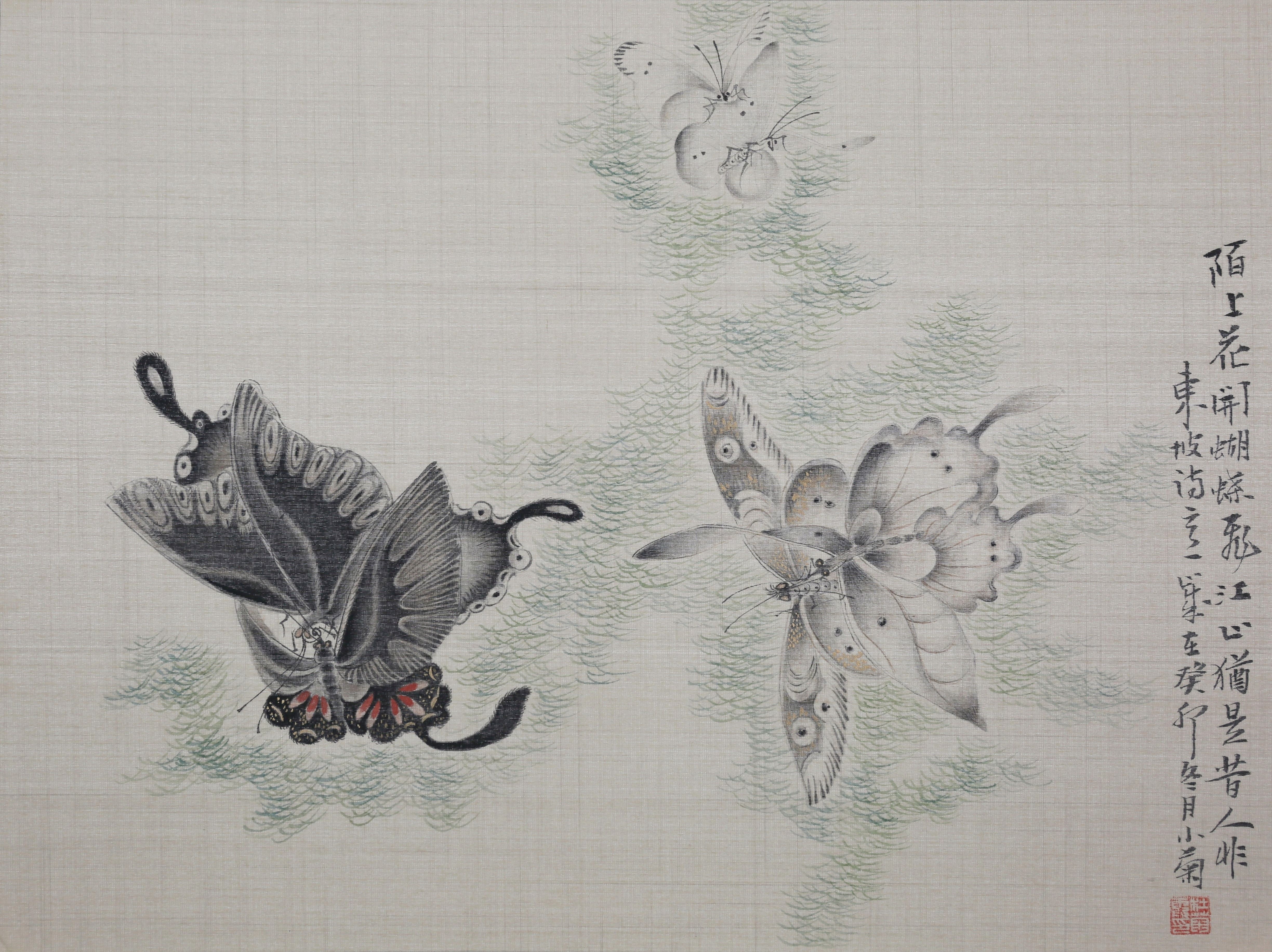
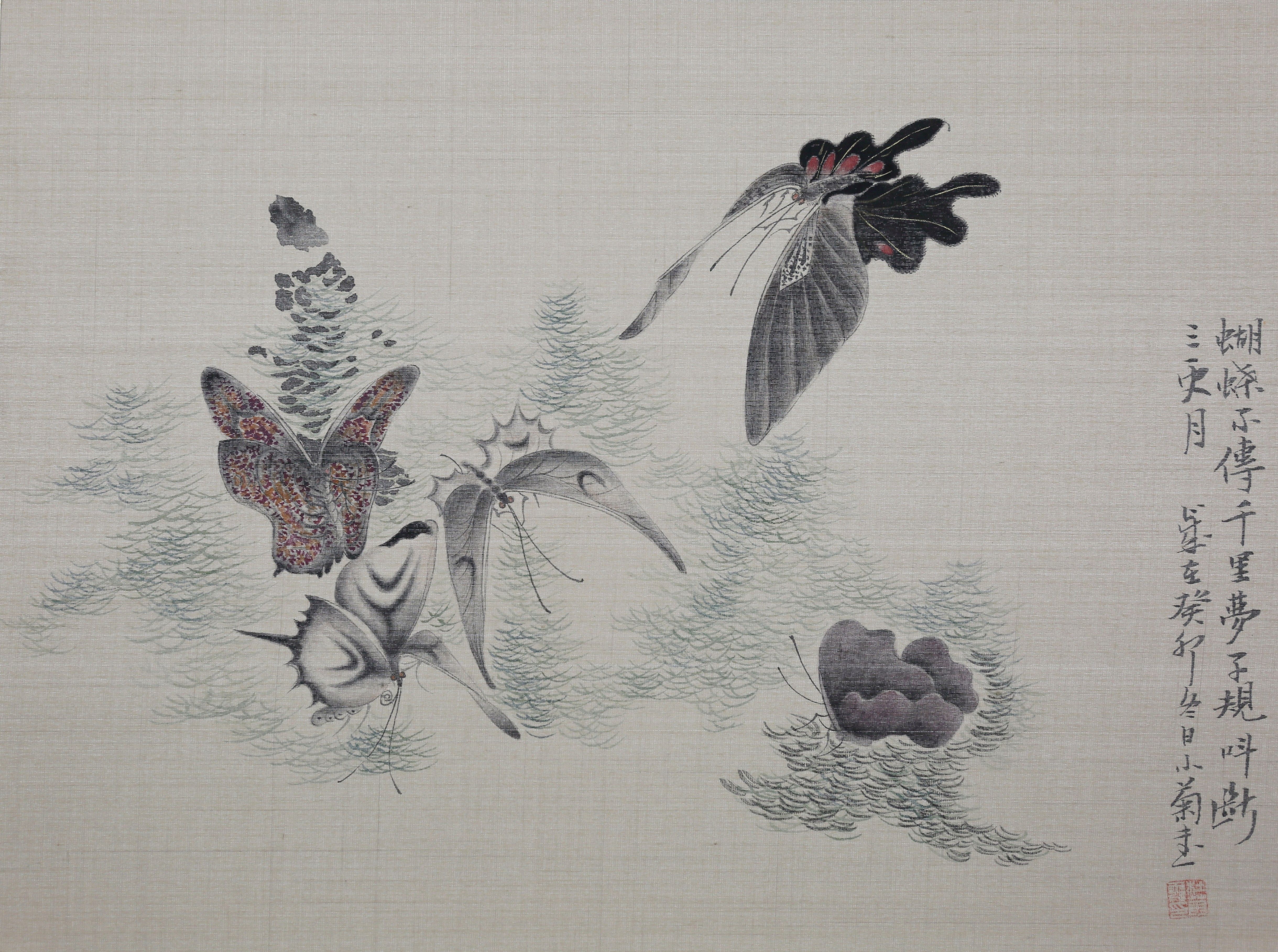
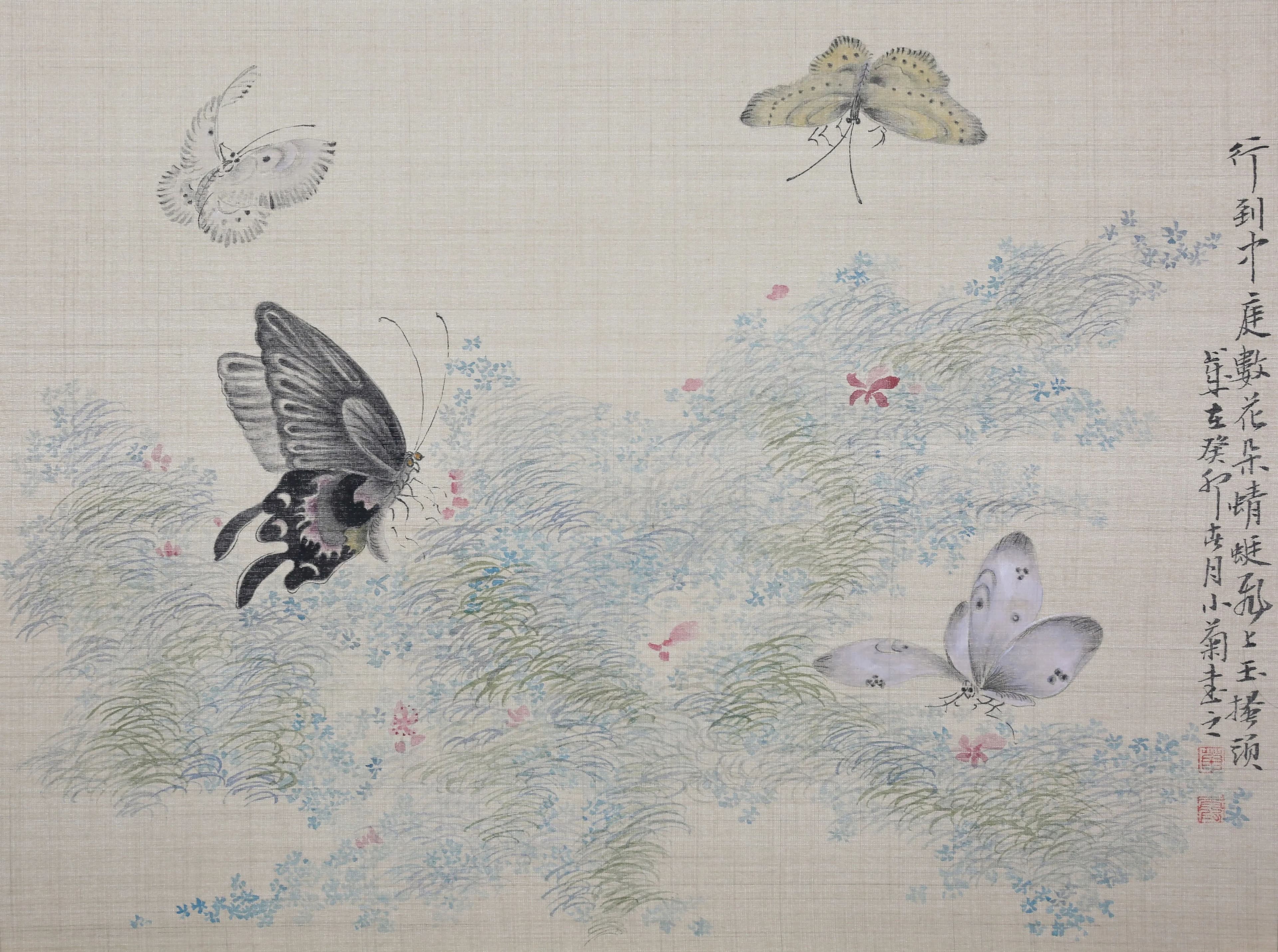
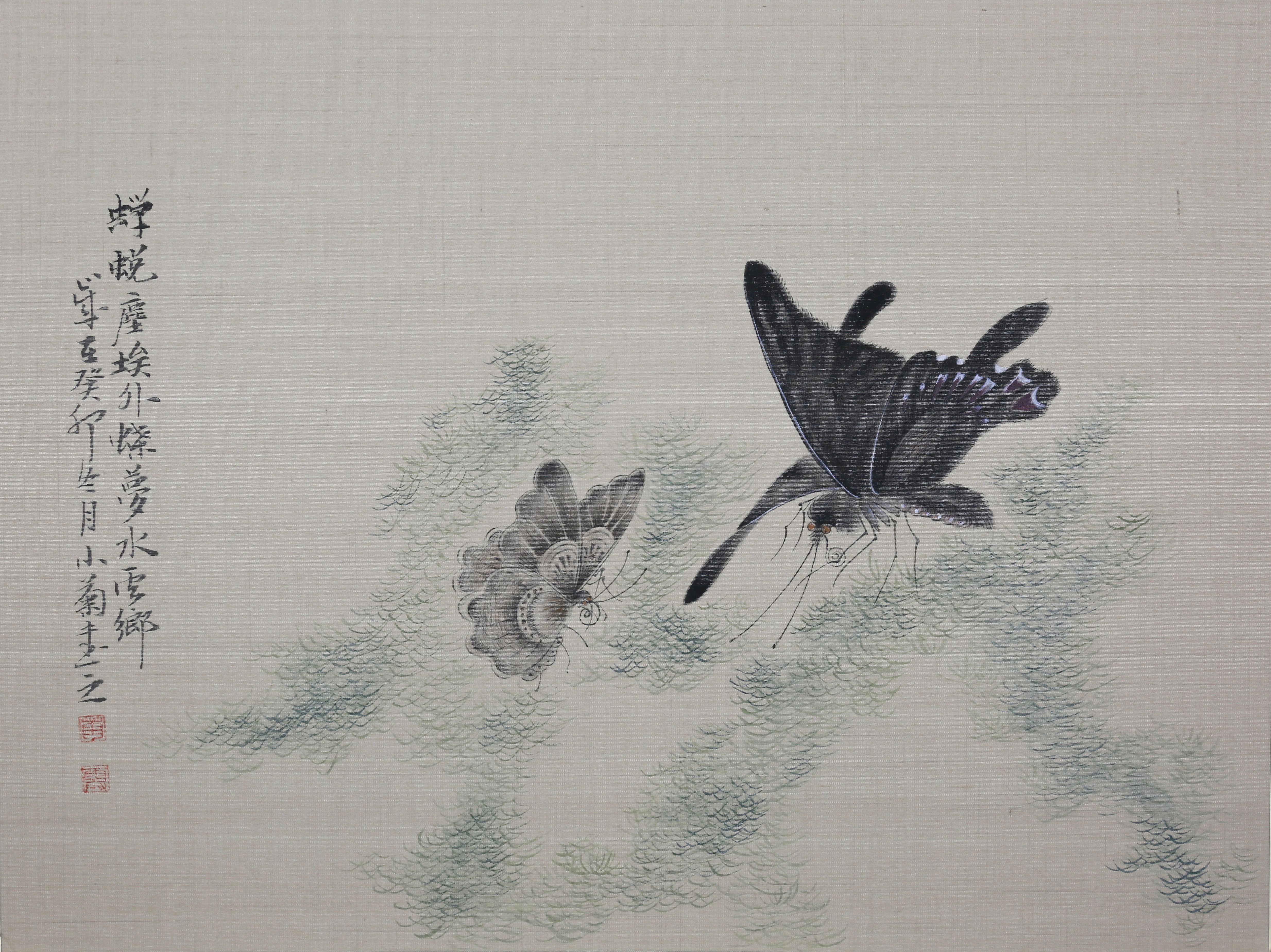
Du Juxia's Dream of the Butterfly series draws upon this rich cultural tradition. Through exquisitely painted butterflies, blossoms, and classical inscriptions, the artist transforms the ancient language of gongbi painting into a quiet meditation on change, memory, and the nature of existence. Like the butterfly itself, the paintings appear graceful and effortless, yet beneath their elegance lies remarkable technical discipline and profound philosophical reflection.
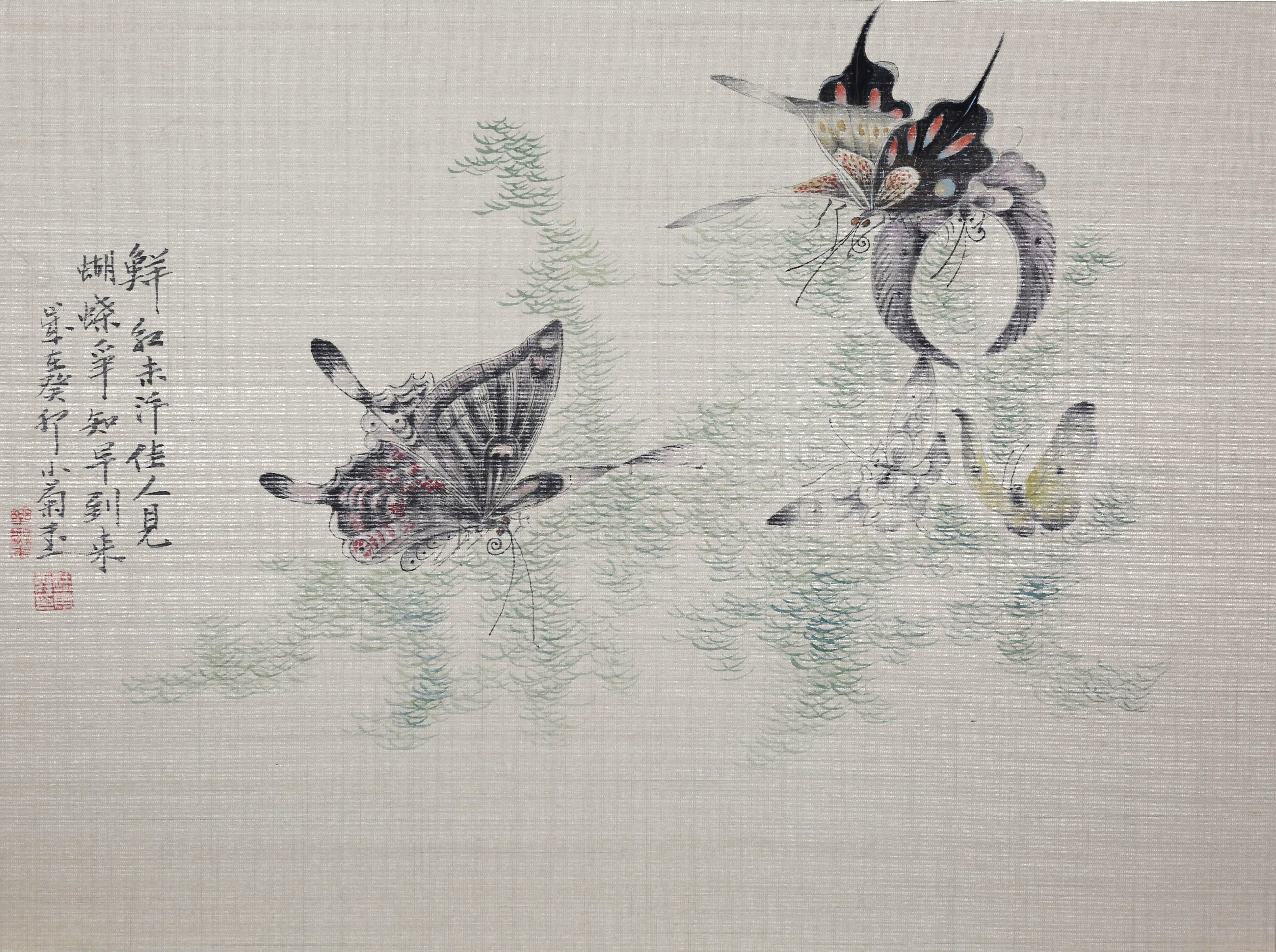
The Butterfly Dream The title of the series refers to one of the most celebrated passages in Chinese philosophy. In the Zhuangzi, the Daoist philosopher Zhuang Zhou dreams that he is a butterfly, happily fluttering among flowers. Upon waking, he wonders whether he is a man who dreamed of being a butterfly, or a butterfly now dreaming that it is a man.
For more than two thousand years, this brief story has inspired poets, painters, and philosophers throughout East Asia. Rather than presenting a logical argument, it invites reflection on transformation, identity, and the uncertain boundary between dream and reality.
Du Juxia does not illustrate the story literally. Instead, she captures its spirit. Her butterflies drift gently through flowering branches, suspended between movement and stillness, becoming visual metaphors for the changing nature of life itself.
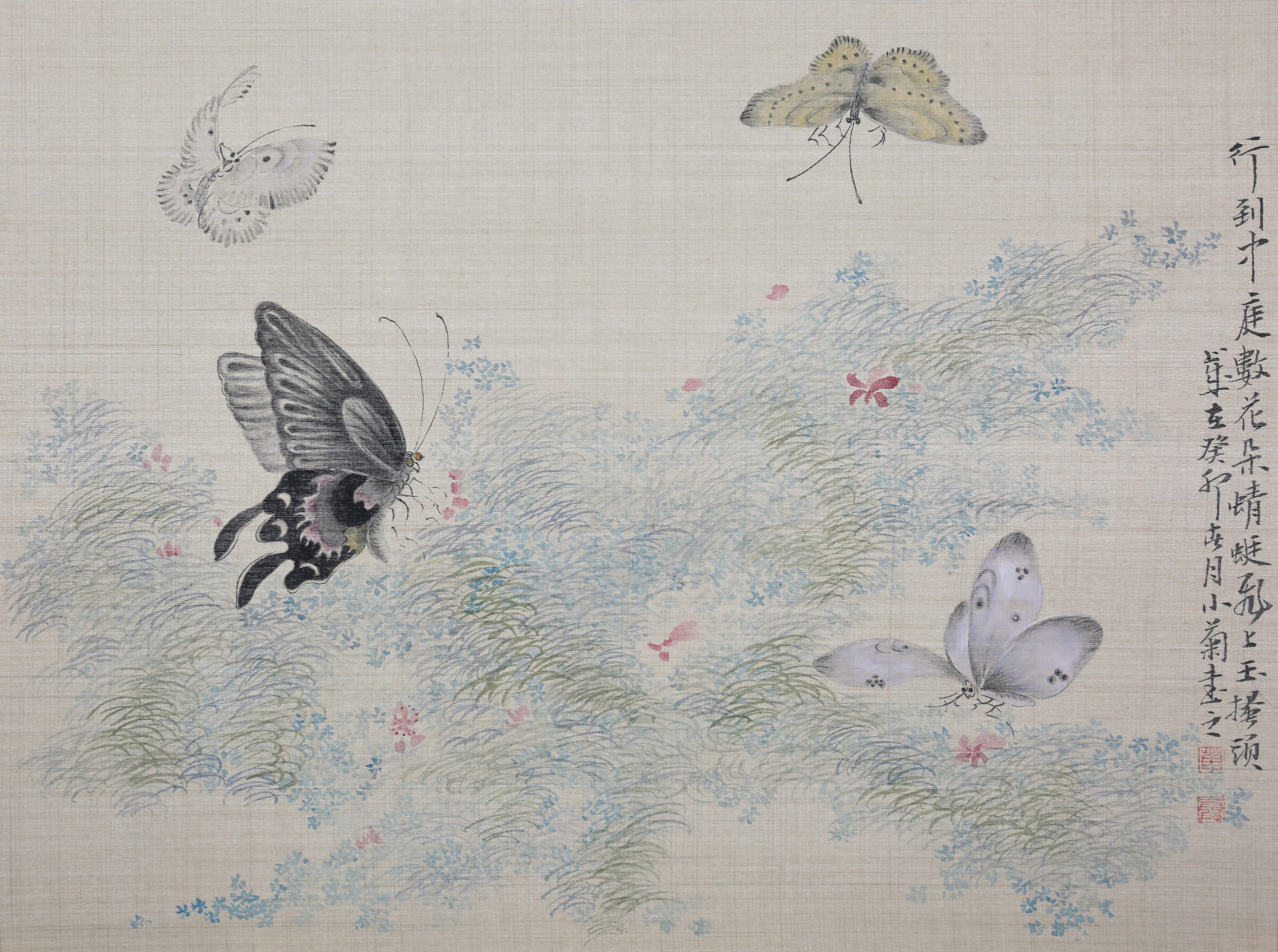
Gongbi as Contemplation Working in the centuries-old tradition of gongbi, Du employs precise brushwork, controlled color, and extraordinary attention to detail. Every wing, petal, and leaf is rendered with patience and accuracy.
Yet technical perfection is never the ultimate goal. In Chinese painting, craftsmanship serves contemplation. The measured rhythm of gongbi encourages viewers to slow down, discovering beauty through careful observation rather than immediate impact.
This quiet visual experience mirrors the philosophical atmosphere of the Butterfly Dream. Rather than demanding interpretation, the paintings invite meditation.
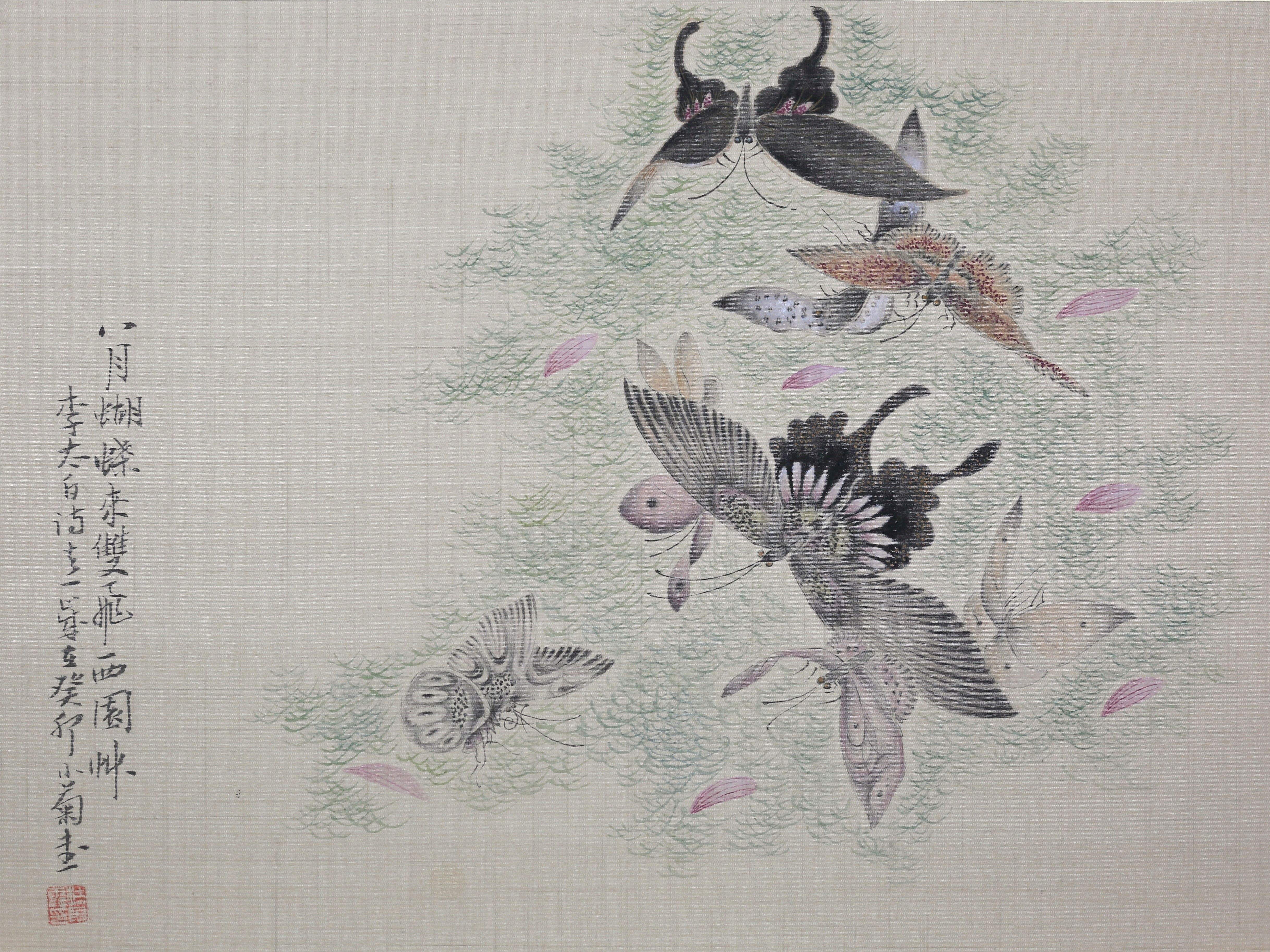
Poetry, Painting, and Nature One of the defining characteristics of Chinese painting is the union of image and literature. Throughout the Dream of the Butterfly series, carefully chosen inscriptions from classical poetry accompany the painted compositions.
These verses do not simply describe the images. Instead, they expand the emotional and intellectual space of the paintings, allowing words and brushwork to resonate together.
Flowers bloom and fade. Butterflies emerge, wander, and disappear. Seasons change. Human emotions follow similar rhythms. Through this dialogue between poetry and painting, Du reveals nature not merely as scenery but as a language through which human experience can be understood.
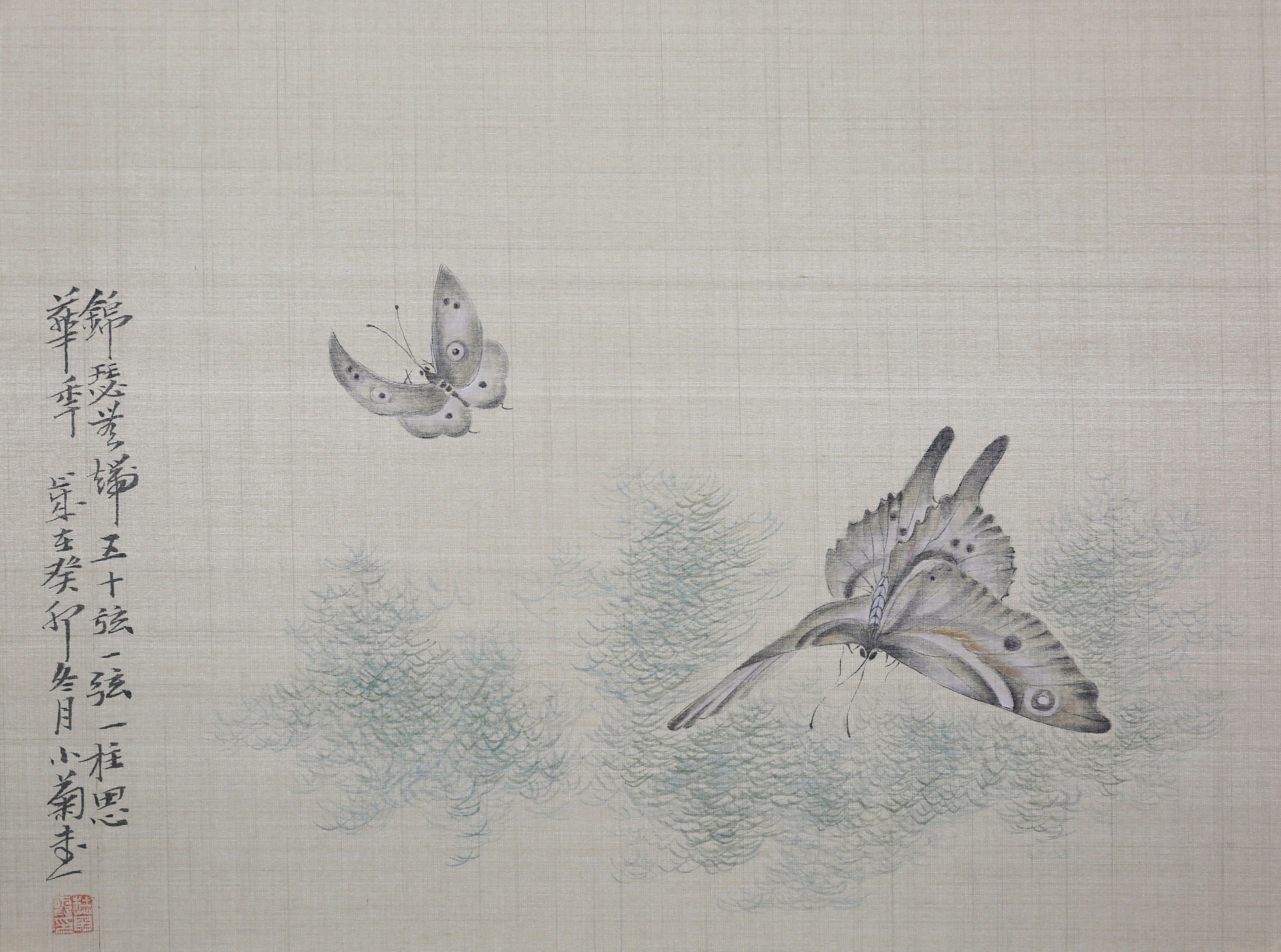
A Contemporary Voice Within Tradition Although firmly rooted in traditional techniques, Du Juxia's paintings speak naturally to contemporary audiences. In a world increasingly dominated by speed, technology, and constant distraction, her works offer something increasingly rare: stillness.
Rather than overwhelming viewers with spectacle, they reward close looking. Every detail invites attention. Every butterfly suggests transformation. Every blossom reminds us that beauty exists precisely because it is temporary.
The paintings therefore become more than representations of nature. They offer an alternative way of seeing—one grounded in patience, harmony, and quiet reflection.
Dreaming Beyond Reality The enduring power of Dream of the Butterfly lies not simply in its refined craftsmanship, but in its ability to connect one of China's oldest philosophical ideas with universal human experience.
Whether viewed through the lens of Daoist thought, botanical beauty, or contemporary art, Du Juxia's paintings gently dissolve the boundary between the visible and the invisible, between memory and imagination, between the dreamer and the dream.
Like Zhuang Zhou's butterfly, they leave us with no final answer—only a deeper appreciation for the mystery and transformation that define both art and life.