Introduction: A Contemporary Vision of Chinese Literati Art
Chinese literati painting has never been merely a matter of depicting landscapes, flowers, birds, or human figures. At its heart lies a cultural ideal that brings together poetry, calligraphy, painting, and seal carving, transforming artistic creation into an expression of intellectual cultivation, personal character, and spiritual reflection.
Wu Zhenhuan (吴震寰, b. 1968), a contemporary Chinese artist from Leizhou, Guangdong Province, works across poetry, calligraphy, painting, seal carving, and art theory. His practice seeks to extend the literati tradition beyond the reproduction of historical styles. His theoretical interests include Grand Chinese Painting Theory, Void-Image Theory, and Classical Expressionism, reflecting an ongoing exploration of traditional Chinese aesthetics and contemporary visual language.
The Literati Tradition: Poetry, Calligraphy, Painting, and Seal Carving
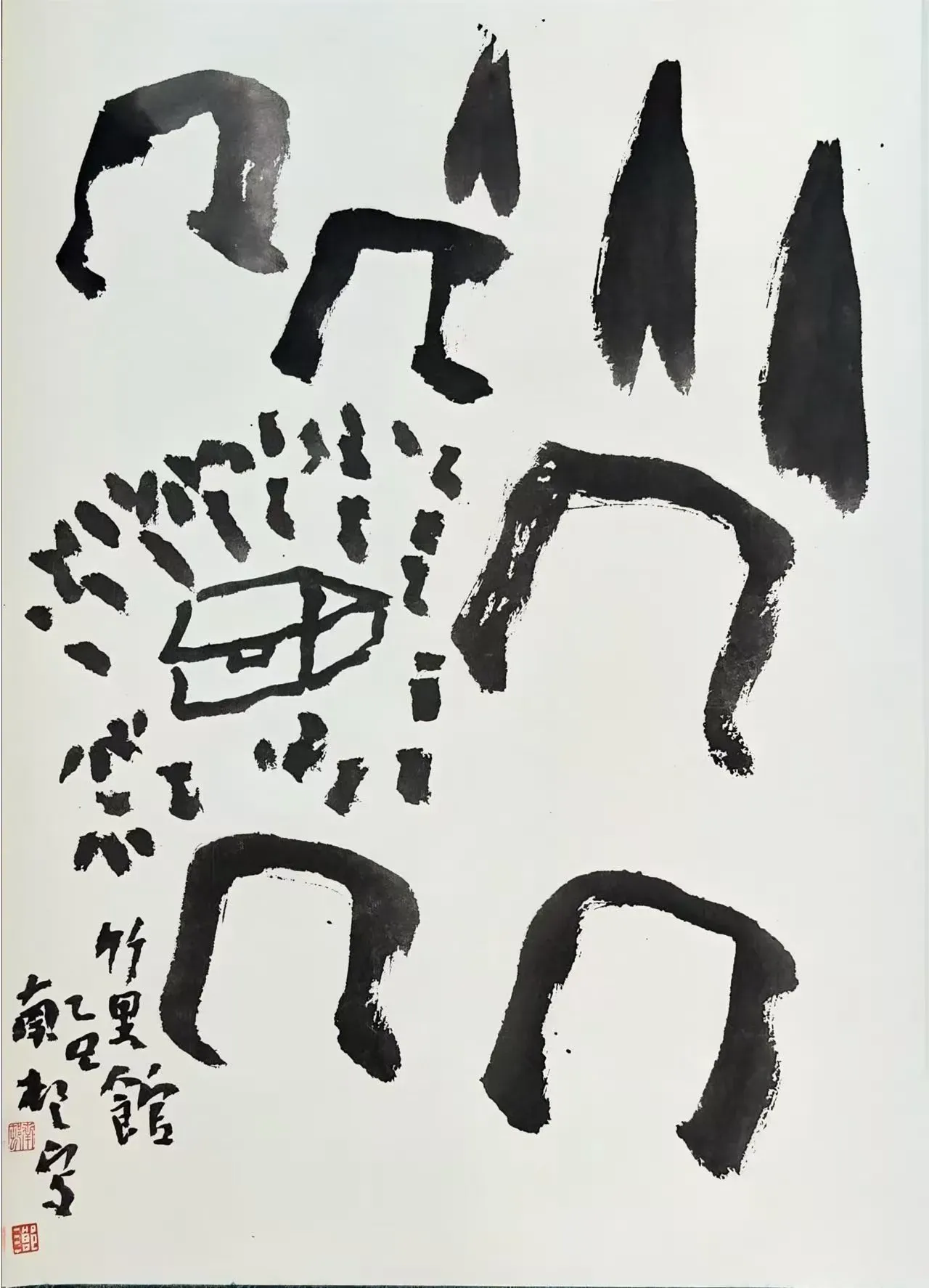
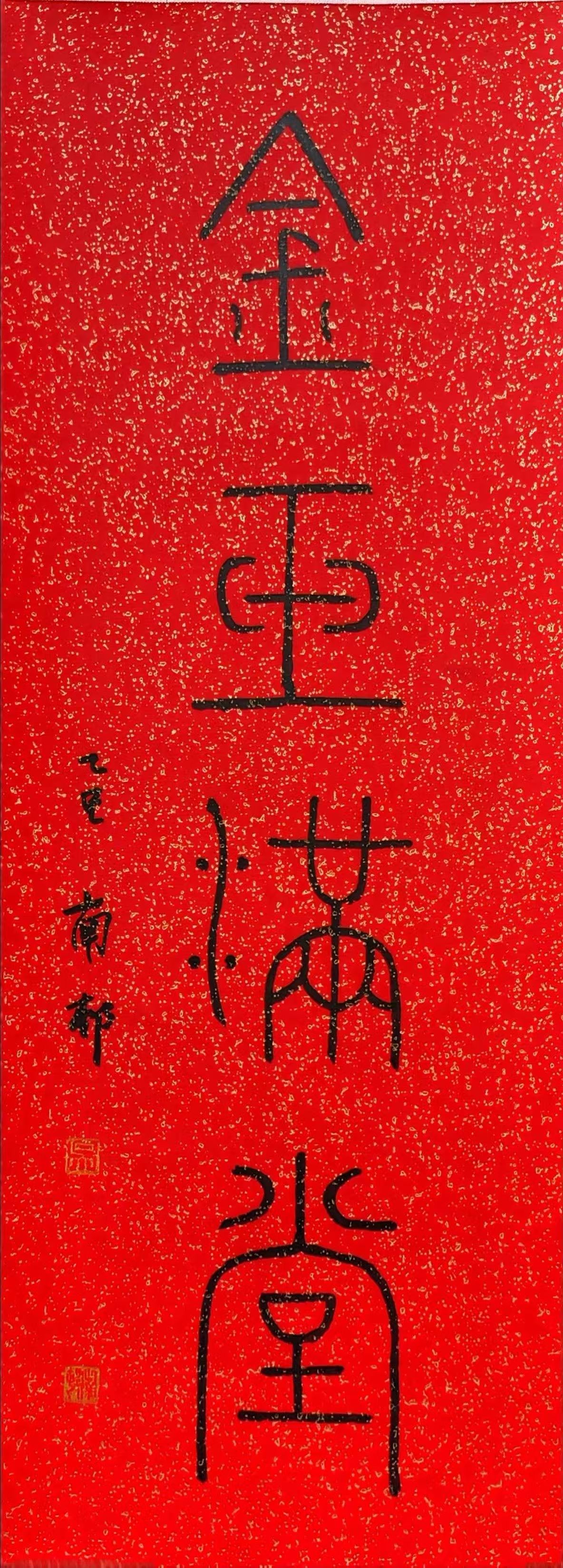
In traditional Chinese literati aesthetics, poetry, calligraphy, painting, and seal carving are interconnected forms of expression. Wu’s 《Bamboo Lodge》 (2024) invokes the cultural memory of Wang Wei’s Tang-dynasty poem of the same title. Rather than illustrating the poem literally, Wu constructs an abstracted image of bamboo and a dwelling through bold, almost calligraphic strokes. The work establishes a dialogue between classical cultural memory and individual invention.
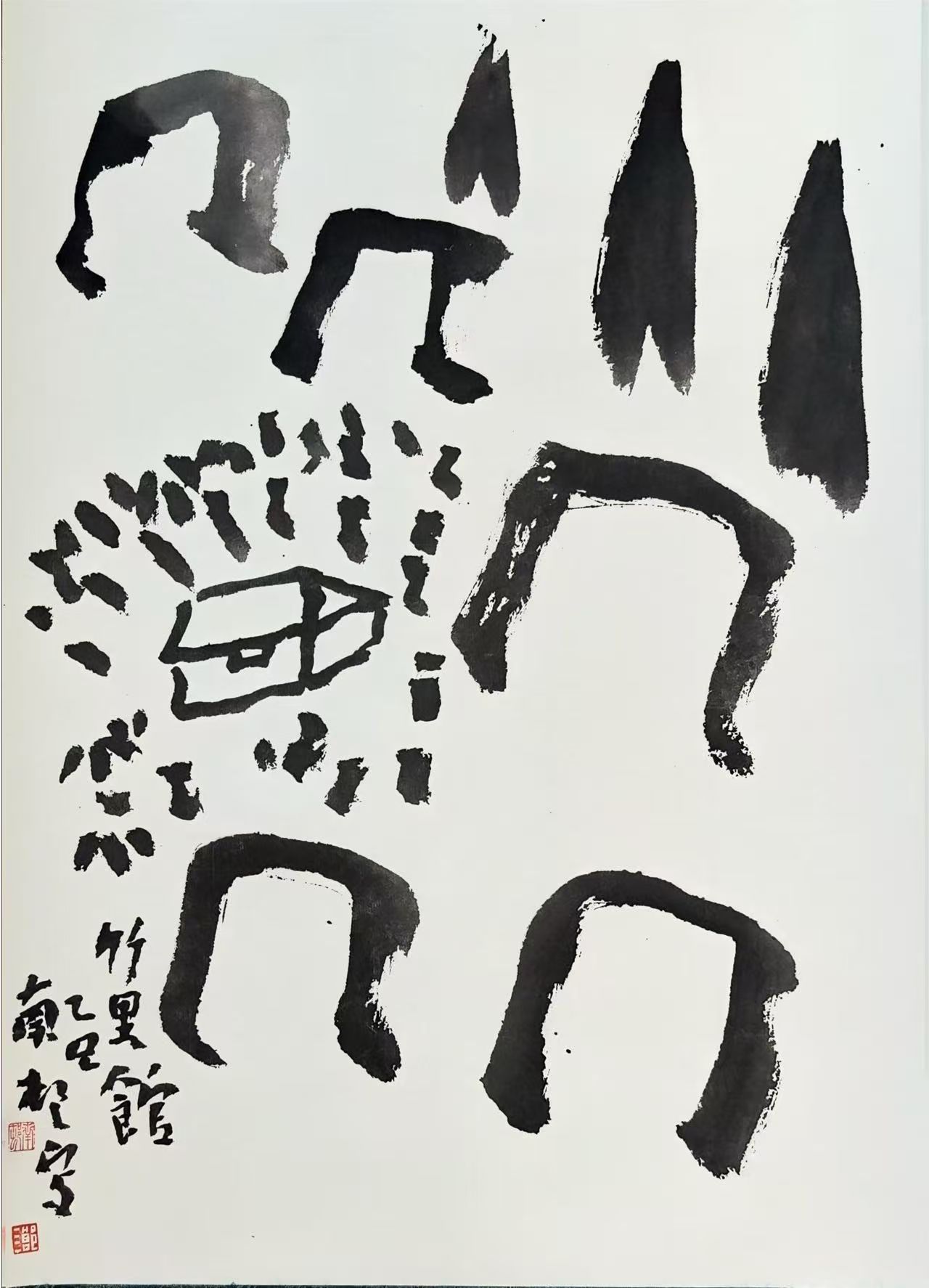
《Hall of Gold and Jade》 (2025), executed in seal script, demonstrates the expressive possibilities of calligraphy. Its red paper, vermilion seals, and hanging-scroll format emphasize the ceremonial and visual qualities of the written word, bringing traditional art into the sphere of everyday cultural life.
Void-Image Aesthetics: Beyond Representation and Abstraction
Void-Image Theory is an important part of Wu’s artistic thinking. It proposes an aesthetic path beyond the conventional opposition between figuration and abstraction, drawing inspiration from Eastern thought and Zen philosophy. In 《Bamboo Lodge》, concentrated strokes suggest bamboo and architecture while preserving the movement of the brush itself. The painting becomes both an image of a landscape and a record of its formation through ink.
The Human Figure: Classical Subjects and Personal Expression
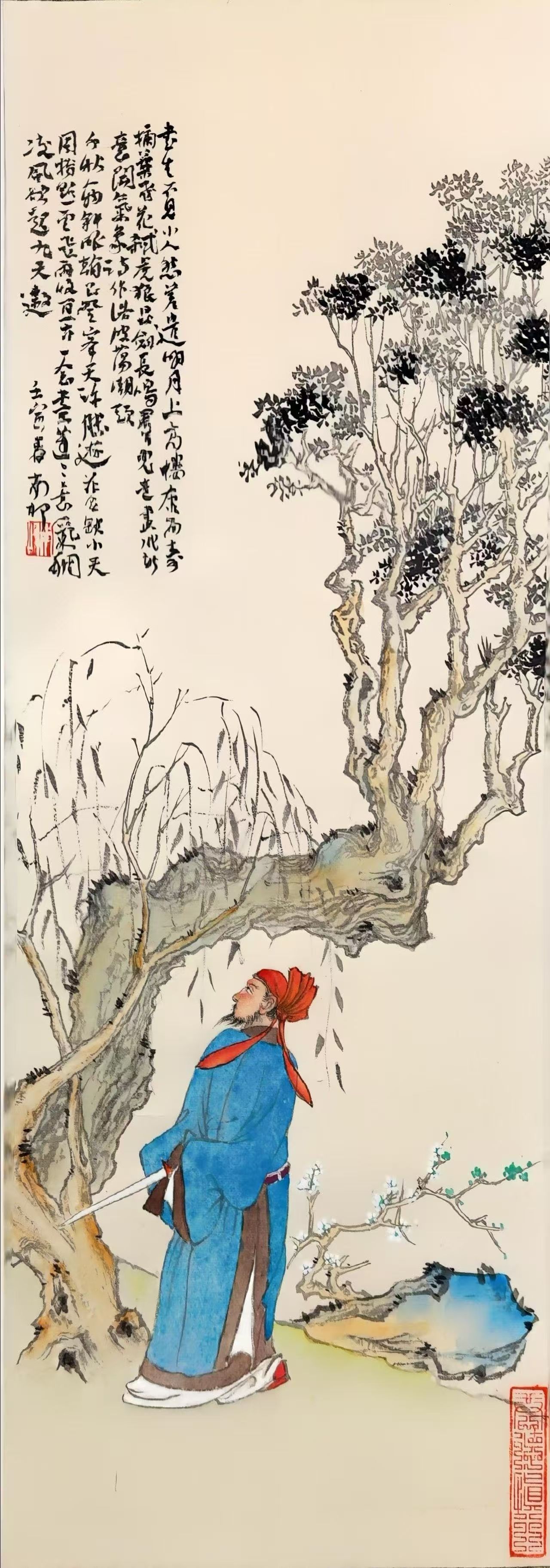
In 《Contemplating the Sword》 (2022), a scholar-warrior holding a sword becomes the focus of a composition combining ink, restrained color, and literary inscription. The figure evokes courage and moral independence, while the accompanying poetry expands the image into a reflection on character and aspiration.
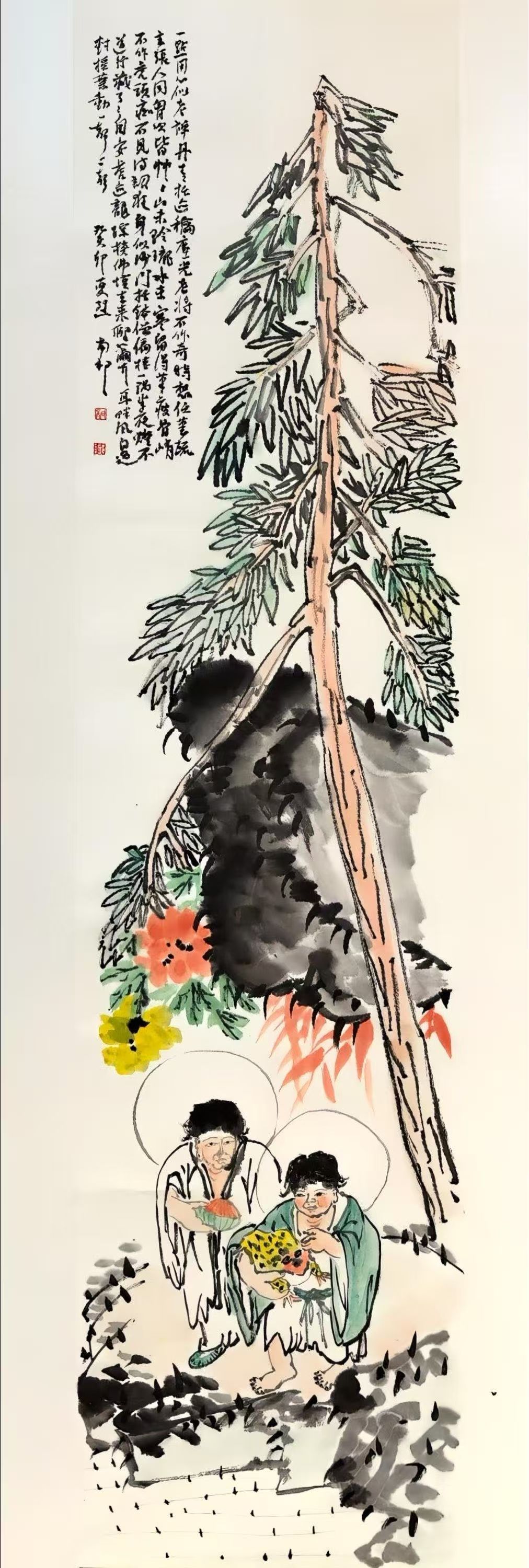
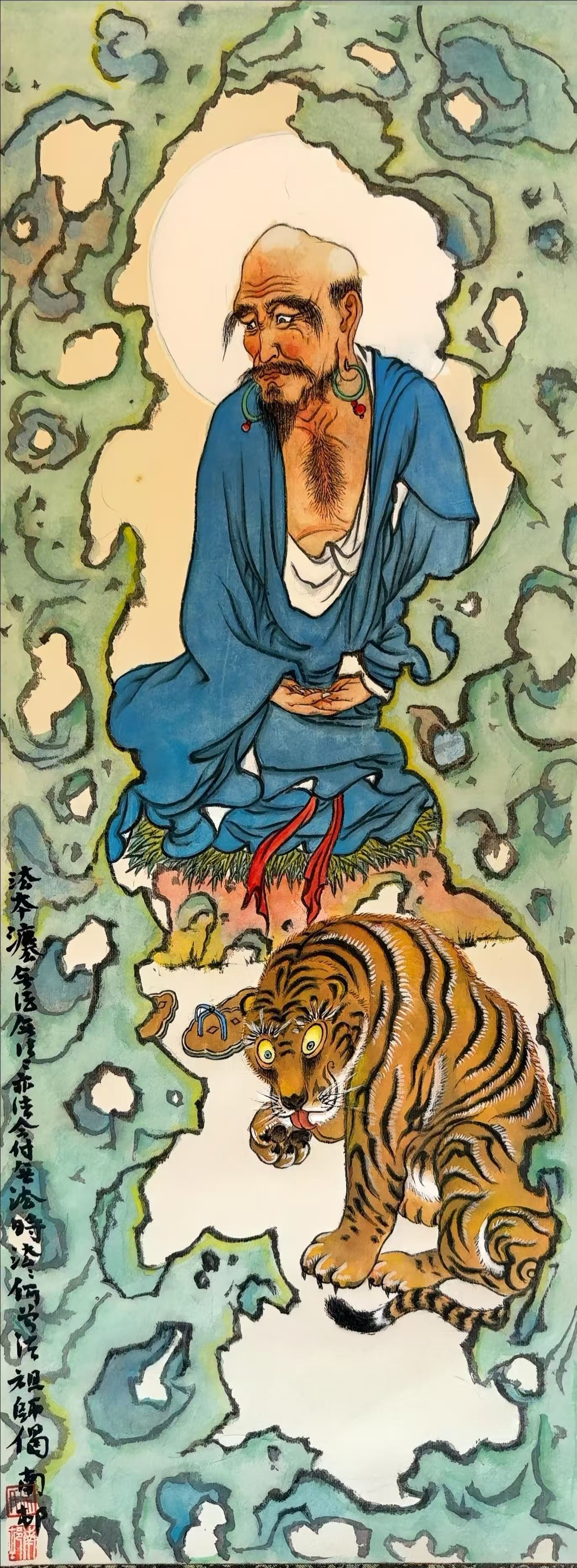
《The Twin Immortals of Harmony》 draws upon Chinese folk culture, where the paired immortals symbolize concord and auspicious relationships. 《Tiger-Taming Arhat》 engages Buddhist iconography, exploring associations with spiritual discipline and the mastery of powerful forces. These works demonstrate Wu’s interest in interpreting inherited imagery through personal expression.
Animals as Symbols: Strength, Independence, and Ideals
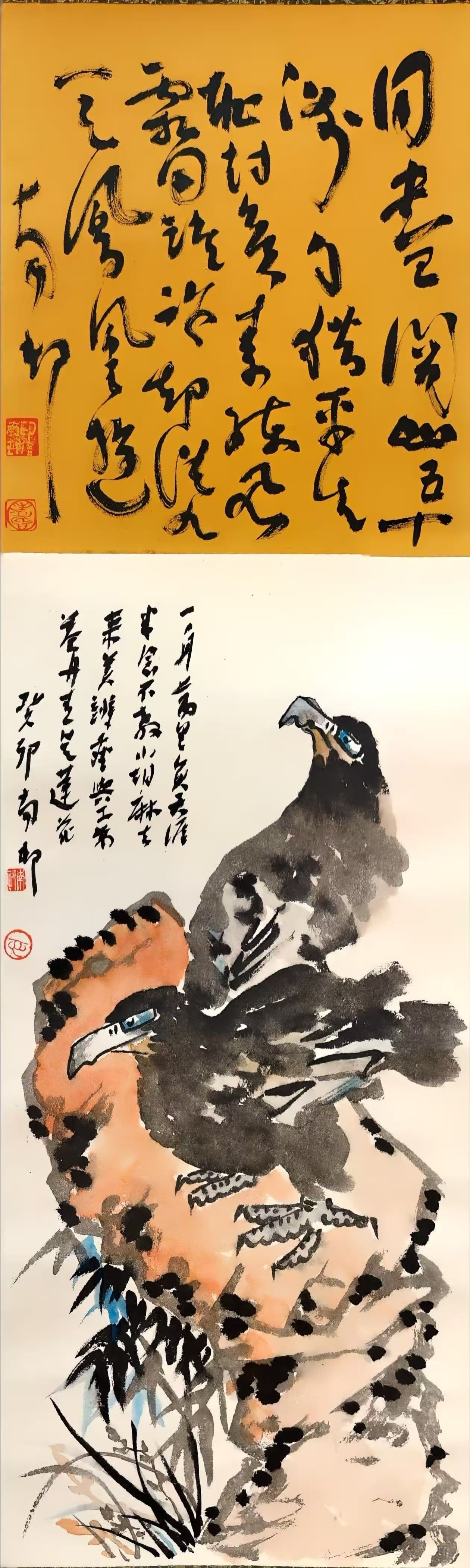
In 《The Great King》 (2024), the tiger becomes a symbol of strength and broader ideals. In 《Twin Eagles》 (2023), the eagle evokes freedom, elevation, and independence from worldly ambition. These works reorganize familiar Chinese symbolic traditions through the artist’s poetic imagination.
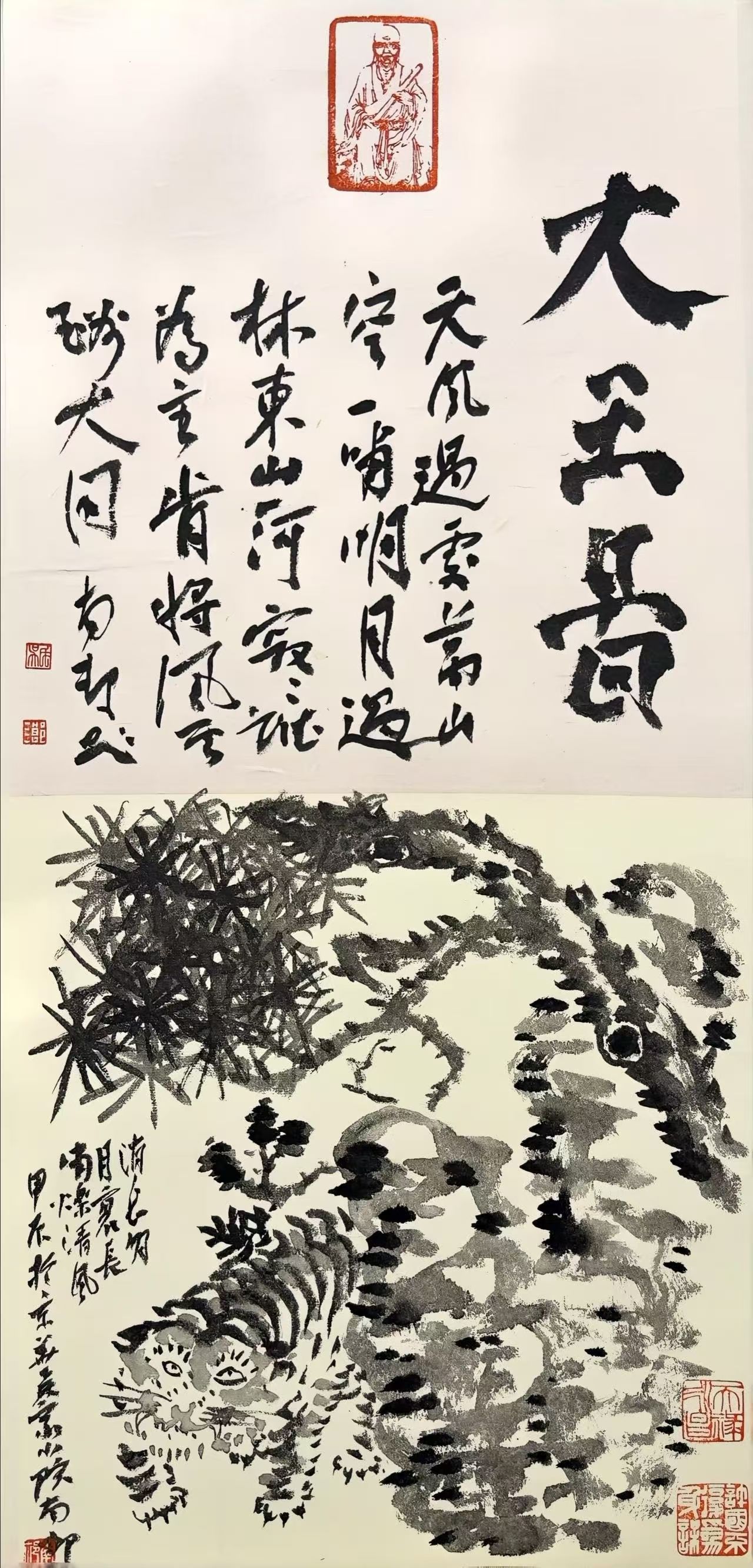
Their significance depends not only on literary associations but also on the relationship between brushwork, composition, and imagery. The interaction of these elements determines whether symbolic meaning becomes a convincing visual experience.
Brushwork, Inscription, and the Unity of the Artwork
Across Wu’s paintings, brushwork and inscription operate as mutually reinforcing elements. Calligraphic lines establish rhythm and direction, while imagery gives visual form to ideas that language cannot fully express. Traditional mounting and seals also contribute to the overall structure.
Yet the use of traditional formats does not automatically guarantee innovation. A critical assessment must consider the expressive strength of the brushwork, the relationship between inscription and image, and the coherence of the composition. Wu’s continuing challenge is to translate theoretical ambition into the material qualities of each work.
Conclusion: Tradition as a Living Artistic Resource
Wu Zhenhuan’s art offers a multifaceted exploration of the contemporary possibilities of Chinese literati painting. Through poetry, calligraphy, symbolic imagery, and expressive brushwork, he revisits established traditions while seeking new ways to articulate personal and spiritual experience.
The significance of his practice lies not simply in preserving traditional subjects or techniques, but in reorganizing them through individual expression and theoretical reflection. Further study of his works, brushwork, and theoretical writings will help clarify his position within contemporary Chinese art. His practice nevertheless provides a valuable point of departure for considering how Chinese painting can remain rooted in its historical traditions while responding to contemporary aesthetic questions.